Doughnuts. Burnouts. A spinning race car. Thick treadmarks on the asphalt. A relentless scream of eight cylinders by Renault and of an international crowd just absolutely losing it. Sebastian Vettel stopped his car in the middle of the front stretch of the Buddh International Circuit in India - embraced by a massive cloud of tyre-smoke, super-stardom and four gold-pieces - being immortalized and crystallized in history as one of the all-time greats in a technical sport that happens to be one of the most popular one of all the sports around the planet. He got out of his car, threw his fists in the air as if claiming "I am the master of the Galaxy". He was, in fact, even if just for a few moments. An undisputable master of... some sort the least. He then turned back to his vehicle and bowed down in front of it - the craft of composite materials and solutions that helped him to reach the final frontiers of driverhood where only just a handful of people have gone before. As the cloud settled and the man stood tall was it clear that it was history happening. Live. History, whose pages started to fill multiple ages before, in another place. Where mankind was taking another unfamiliar, roaring step into the unknown with no professionals, just fearless daredevils with beautiful minds.
Showing posts with label indycar. Show all posts
Showing posts with label indycar. Show all posts
Thursday, 7 November 2013
The Controversial and Glorious Beginnings of Grand Prix Racing
Doughnuts. Burnouts. A spinning race car. Thick treadmarks on the asphalt. A relentless scream of eight cylinders by Renault and of an international crowd just absolutely losing it. Sebastian Vettel stopped his car in the middle of the front stretch of the Buddh International Circuit in India - embraced by a massive cloud of tyre-smoke, super-stardom and four gold-pieces - being immortalized and crystallized in history as one of the all-time greats in a technical sport that happens to be one of the most popular one of all the sports around the planet. He got out of his car, threw his fists in the air as if claiming "I am the master of the Galaxy". He was, in fact, even if just for a few moments. An undisputable master of... some sort the least. He then turned back to his vehicle and bowed down in front of it - the craft of composite materials and solutions that helped him to reach the final frontiers of driverhood where only just a handful of people have gone before. As the cloud settled and the man stood tall was it clear that it was history happening. Live. History, whose pages started to fill multiple ages before, in another place. Where mankind was taking another unfamiliar, roaring step into the unknown with no professionals, just fearless daredevils with beautiful minds.
Monday, 20 May 2013
Grand Legacy movie
The beginning of Grand Prix racing and IndyCar:
Friday, 30 November 2012
When The Saints Go Merging In
2012 saw some extraordinary changes in motorsports. Some series thought it was time to put the racing slicks up on the shelf, while others thought it was a good idea to occupy the neighbour's backyard with eventually moving in under a common roof. Whether it's good or bad, it is happening now with some very intriguing results. Let's see what the year of the London Olympics had up its sleeves for the motor racing fan not associated with.
Whoever thought the credit crunch was all bad was either an estate agent, a CEO of a major company, some millions of average citizens, or an F1 fan. It all started with the IRL/ChampCar merge back in 2008. While the unification had nothing to do with the credit crunch, as it happened almost a year before that, it set the template for the year of thin calves to come, and outlined some of the DOs and DON'Ts to be considered, which were thrown out of the window in this example. Rewinding the clock, IndyCar split to CART and the Indy Racing League back in the mid-'90s with CART having all the teams, all the media coverage, all the know-how and sponsorship, leaving the IRL with some souped-up go-karts, a calendar with about four dates among which, though, one was the Indianapolis 500. I am sure all of you played those car card games where you have a single car that is unbeatable by almost any parameter (older packs: usually a Ferrari of some sort, newer ones: a Veyron) and you can turn around the game and win from only having three cards left with this Joker in hand. Well, the Indy 500 is something very similar. CART (later ChampCar) was very impressive, fast and exciting, but it lacked the heart the clumsy IRL had. This, combined with the lack of interest caused by the split with fans wandering off to NASCAR, ChampCar had to bow out as neither the teams, the manufacturers or the sponsors slowly realised it was a series of lost values and drifted to the one that still had some. Thus, ChampCar went out of business, and all of the assets were acquired by IRL with the promise to appeal to the fans of both series.
Unfortunately they got it all wrong. The first time at least.
They took the worst of two worlds and boiled it down in a tub to make a mash no one was particularly in favour of. The one-make cars that were designed to go fast around ovals while being raced mostly on street circuits was not something that went through without major question marks, but - cutting to the chase - the now unified IndyCar heard those criticisms and added some more ovals eventually, encouraged manufacturers to take part, new chassis developed with parts to be self-developed later on. It all seems to be recalling the glory days of Indy racing. But it is too late, the damage was done, after almost 20 years. NASCAR is king in the US.
So out of all this, what the ALMS and GrandAm have to learn? Before I would get into that, let's sum up another similar, although potentially lot more successful story.
The Intercontinental Rally Challenge was conceived by EuroSport as a made-for-TV alternative to the WRC. It all seemed to be working, however, there were a few problems. Apart from the fact that it wasn't really intercontinental. Nor it came with a too prestigious title at the end of the year. Still, the exposure it granted was enough to attract teams and make a spectacle. However, as an old, forgotten brother in the closet, there hang the FIA European Rally Championship, challenged for the same spot. So the question was rather obvious: why shouldn't the privileges of media pass on to the series that had the history, making a unified European challenge. And this is exactly what happened. Or at least what should be happening from 2013.
Cutting back to American sportscar racing - there is a bad example and a rater positive example to follow here: how to incorporate the best of both worlds without all the setbacks.
Givens are: one series that baldly embraces its European ancestry, and another one - sanctioned by the country's largest body, owning the biggest motoring spectacle, the NASCAR Sprint Cup Series - creating something of their own and recalling some of the atmosphere of the Carrera Panamericana ,where European sportscars were put alongside American stock cars for an epic challenge through Northern Mexico, all these manifested in the Daytona Prototype cars running at the Daytona road course.
This time the situation is a lot more complicated: how to keep those values at a balance? What to throw out and what to keep?
Especially that NASCAR is going to be the sanctioning body, it's easy to assume with a told-you-so attitude that it would go down as the longer, slower and uncut version of NASCAR, however this seems not to be the case. They are even crowd sourcing a name for the new series.
Push comes to shove, some things have to be eliminated. Tracks, teams, even categories. The single biggest question is that whether DPs (top GrandAm category) or LMP2s (same for ALMS) should go. It has already been decided that the GT class would come from ALMS, which would strongly suggest that DPs take the top step, ditching P2s. Or maybe not. Just think about it: the link missing between full-blown prototypes (as P1s) and GTs are the cars with production-DNA. Which are the P2s and DPs (with production-derived engine blocks). In that order. Why not have P2s AND DPs, with DPs renamed "P3"s, or P2s as "SP"s as in "Sebring Prototype". Of course FIA and ACO would have a say or two about this, but it would be the logical step to do as their power output, technology and rice would suggest. Or taking the matter even one step further, DPs have a slight stock car DNA with their attempted mimicry of actual production cars, even they are very subtle touches as the headlight-decals or some vague attempt to resemble the basic silhouette of the "donor" car.
There is something primarily engaging with racing cars that - at least in part - look like production models. That is partly why NASCAR is successful ("everyday" cars running around 200mph, "I have one of those"), that is why the V8 Supercars, DTM or the SuperGT evokes some sort of instinctively tribal phenomenon.
Funnily enough, DTM and SuperGT announced the unification of their specifications, which creates an almost WWII-grandeur alliance in motorsports, the "Axis of Silhouette". Did I mention that Daytona Prototypes are welcome in the GT300 category in SuperGT? Did someone just say there's an intercontinental thread of stock cars, sport prototypes and silhouette touring cars, making perhaps one, worldwide-spread, unified series somewhere down the line? If this is not destined for epic greatness or miserable failure, I don't know what could touch this anyway. Talking about credit crunch and necessity: creativity cannot be bought.
There are marriages in times of need where romance is left outside the building with surviving being the keyword. These never go down without bitterness (as no marriage does), but that doesn't mean there can't be really extraordinary children out of them.
Sunday, 24 June 2012
The Struggle Within - FIA World Championships On The Verge Of Collapse
Perhaps needless to say that the root of the problems in both cases is finance, although from very different perspectives.
V6 turbo engines in F1 should be effective from 2014. To cut a long story short, teams don't like the idea because engines would cost more to buy (initially at least), thus they want the current engines to be in charge for as long as possible, because they are cheap and got to the point where they are bulletproof due to their perfected multi-year designs. Let's admit: there hasn't been too many engine failures in recent years. But the world of motorsports stepped to a way new level in the meantime with the added 'green' factor. And while F1 has jumped on the bandwagon with the KERS system, it just draws more attention to the elephant in the room: the engines have been the same for a long time.
When a couple of years ago engine development was frozen, it was the right thing to do for cost-effective reasons and with the added rev-limiting reliability was strengthened that enabled multi-race usage, too - another cost-cutting feature. It all seemed to be going well when the recession hit big time leaving F1 in 2009 with works teams leaving or about to leave and classic races threatened with dropout. To give a nudge and a twist to the knife in the open wound, FIA announced even more restrictions in budget and an equalizing two-tier concept between the 'big' and the 'small' teams in their new Concorde Agreement proposal. This of course enraged the Formula One Team Association enough to quickly announce a breakaway rival series to F1, where works team were free to throw around and burn money according to their good will, getting rid of all the 'green' stuff, in front of audiences that were witnesses of decades Grand Prix tradition but deprived of F1 in recent years or with no GP tradition at all, but simply being new markets. Ultimately a compromised settlement between FIA and FOTA was made until 2012.
On a personal note, in retrospective, I would have liked to see the Grand Prix World Championship happening. Although it all seemed a disaster at the time, it would have correlated with the tradition of pre-war Grand Prix racing more - the Golden Age of its kind - with all the national works teams and the classic events.
Well, we arrived to 2012, the time for the new Concorde Agreement - mostly centered around the aforementioned V6 turbo engines. And surprise-surprise: the fulminated Flavio Briatore is rumored to be working on a GP1 series taking effect in the near future. Powered by the current, normally aspirated V8s.
This time it seems more of a reality because, frankly, all the tools are given, and this time it wouldn't do a favor to the biggest teams, but the smaller ones who would not be able to afford the new V6 engines. Delaying or postponing the new engines in F1 wouldn't be a wise choice as the manufacturers already spent a budget of the GDP of a small, third-world country each, thus giving the plan the red card would make them leave for good surely.
So what could the FIA do to save the cabbage and feed the goat at the same time?
A 'slow' introduction of V6 turbo engines would be an acceptable alternative á la Toro Rosso in 2006, where the newfound team was left without the then-new V8 powerplant on the ruins of Minardi and was forced to use V10s from the previous year, although with serious restrictions on revs. A similar transition could be achieved in a year or two in the current situation, but those who shall choose the V8 should not be part of the Constructors' Championship - if FIA really wants to push the new engines.
Whatever the solution might be, a two-tier system seems inevitable or face two separate series.
As far as WRC is concerned, the situation is quite the opposite. Or very much similar - depending on which side you take on the looking glass. WRC has to face extinction. In the 80s it was competing with F1 in popularity and was the only World Championship sanctioned by the FIA beside the open-wheel series during most of the 90s. Now it has two works team with Ford about to leave allegedly and initially no rallies signing up for the 2013 calendar due to an extra 80,000 GBP to be paid by each event's organizers.
In the meantime, the Intercontinental Rally Challenge is lavishing in works teams and televised, classic rallies despite its almost exclusively European range of territory. During its short history it saw events as the Tour de Corse, the Sanremo Rally, the Targa Florio, the Safari Rally, the Circuit of Ireland and at one point even the Monte Carlo Rally! This and works teams as Honda, Peugeot, M-Sport (de facto Ford), Renault, Skoda and Subaru makes one wonder why isn't this series called the World Rally Championship.
Where did it go all wrong and how IRC become such a massive success in such a short time? Parts of the answer has already been detailed as above, but the presence of works teams had to be settled first. What have IRC had that WRC doesn't?
The answer might lie in two crucial errors made by the FIA on behalf of WRC: granting media (i.e. TV) exposure and introducing the rotating calendar. In other words: it had a convincing live appearance all around the world, but on the downside one could never expect if one's favorite event would return the next year. Combine this with the relatively hard access to it by the masses. Put it simply: a WRC run completely new to the calendar capable of giving the jizz almost exclusively to the locals only due to hard to find it on TV. As opposed to IRC that simply picked up events familiar even to non-motorsports enthusiasts and were left out of the WRC calendar, with having granted first-class coverage on EuroSport. The different approaches resulted in the strange phenomenon in 2009 and 2010 where WRC was left without the Monte Carlo Rally while IRC had the Col de Turini televised live on EuroSport.
And maybe there's a third reason: FIA being at IRC as a sanctioning body only, not peeking over their shoulders all the time. Nevertheless, this sandbox war happens in its own backyard. Such as the alleged F1 vs. GP1 battle.
What is the FIA doing? Perhaps five world championships is just too much, never mind that F1 - the most popular motorsport and one of the most viewed sports in general all around the world - is one of them? And where could all this lead in the future?
(Un)fortunately, motorsports have been there already. IndyCar is one prime example. When the Indy Racing League dissected from IndyCar, it took the Indy 500 with it and nothing more. It promised low-cost, but competitive racing, truer to American traditions and having one race from the "Triple Crown of Motor Sports". The other half, CART/ChampCar seemed altogether strong and somewhat unbeatable: engines and chassis from different manufacturers, not one-make series as the rival one. But something happened down the line. People started watching NASCAR and even in the decreasing TV figures IRL started slowly coming up and finally beating ChampCar. Also, Team Penske and Ganassi Racing decided to do their own take and go to the Indy 500 anyway later with more and more teams leaving ChampCar in favor of IRL, manufacturers leaving the dying series altogether. The double bankruptcy of the series' owner didn't help either and led to the merge of the two series creating once again a unified IndyCar Series.
What were the crucial downfalls of the ChampCar series that are relevant to our current case with F1 and WRC beside finance?
Briefly: disrespecting traditions.
ChampCar couldn't be further from the American tradition. It virtually had no input from the USA as far as the cars were concerned. One could order chassis from British manufacturers and engines from Toyota, Honda, Mercedes or Cosworth. that sounds more like an F1 assembly rather than an all-American showdown. And then the races. The US developed an open-wheel racing tradition on oval tracks and ChampCar managed to put out a calendar with zero oval races on it in its final year. And for the same reason, European and South-American drivers dominated the championship for over a decade, which didn't help to build the American image either - turning more viewers to NASCAR.
But it's all back now, with a completely new car, various engine manufacturers and a growing demand to more oval tracks, as they are providing immense amount of spectacle.
Same way with WRC and IRC: a merger of the two series seems inevitable if FIA doesn't want to lose WRC's credibility and time is running out: the more they hesitate, the more races will sign up for IRC - the current torch-carrier of traditional events and teams. WRC will lose to IRC at some point, the question is when.
As far as F1 and GP1 is concerned: it is a lot harder mountain to climb, but Bernie burned enough bridges to worth revisiting many of the events that were rejected by F1 long ago or discovering new places to race (not necessarily with the most up-to-date venues). This and a well-known, easily accessible format to racing and regulations could make even the big teams think and would be essentially a no-brainer for the rest of the field to switch. The question is whether Briatore would be able to convince such heavy weapon machinery akin to Ferrari to "join the dark side".
For the final word in the matter is: where Ferrari goes, de facto Formula 1 will there be.
FIA, it is now your turn: WEC has just been reborn. WTCC is overshadowed by one works team. GT1WC is dying. WRC is about to lose out to a rival series. F1 is seduced by easy money.
You were looking so much forward to reinvent everything at the same time that you were fooled by simplicity and old wisdom.
Pick up the fight, go!
Friday, 20 April 2012
Project "Grand Legacy" - a film on the birth of #F1
Also, it would give an insight to the races preceding the event: the 1905 Gordon Bennett Cup and the 1905 Vanderbilt Cup.
All this presented with contemporary F1, IndyCar and other images from various racing series.
Two work-in-progress videos from the middle of the film, showing the Vanderbilt Cup of 1905 with the images of the 1996 US 500 - where the Vanderbilt Cup was revived for the first time.
Please leave comments, and keep in mind that this is all work-in-progress, like I said, so creative advises are very much welcome.
Monday, 17 October 2011
Iguazú, a fall - in memory of #DanWheldon
Gustavo Santaolalla - Iguazu by leila m
Fingers are pointed somewhere, trying to find someone to blame. It may be driver XY, it may be Las Vegas Speedway, it may be IndyCar or it may be consumer culture in general.
"This shouldn't happen."
It will happen again. Sooner or later.
Other people give up hoping that the inevitable shouldn't occur. Some of them sign up for a possible death, knowing or not wanting to think about the possible outcome.
That's how life goes.
Eventually, every drop of water will fall the same place. Smaller or big ones alike.
Rest in Peace, Dan! You were a vitalizing drop of water..
Monday, 20 June 2011
LIVE guide to weekend's motor racing; June 22nd - 26th
Tuesday, 26 April 2011
The Top 10+1 Forms of Automobile Racing
...and here we are. Losing all unnecessary words, let's just say, without racing, cars would be just boring metal-boxes, carrying people from A to B, pumping adrenalie no more than a ride on a subway would. But thank God for racing spirit, no sooner the second car left the factory, the setting has been paved for competitive purposes. So now, let's take the ultimate forms of CAR racing here. See if you get hooked on some of them.
10. Truck Racing

9. IndyCar

"Stone-age Formula 1" - one would think. And I agree, but that is the point. But let's hold the horses for a minute and get deeper a little bit. IndyCar is one of the oldest seres out there (not formally though), originating from the legendary Indianapolis 500. Since the dawn of formula 1, there has been a growing demand to extend the biggest motor racing event in the world to a series, thus CART was created. Indy cars in the beginning wore strinking resemblance of F1 cars, but as the time of aerodynamic design moved forward in the late 60s, they took a different direction in engineering - as Indy still being centered around Indianapolis Motor Speedway and other oval tracks. No wonder, general development still went towards engine power, even after F1 started backing down. In general, an Indy car is a much cheaper design than an F1, and lately it has become a spec series. Equal cars fighting through ovals and street circuits, being similar to F1 racers 20-25 years back (especially with the new formula from 2012), they sometimes bring the same excitement as those races back in the day. That alone makes it to be on the list.

7. Dakar

6. NHRA Top Fuel

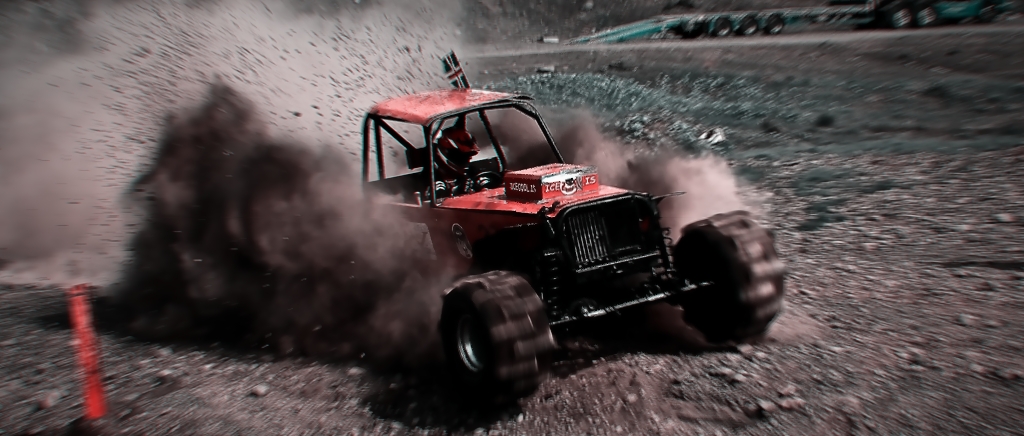
5. Formula Off-Road
4. DTM

3. Formula 1

2. 24 Hours of Le Mans

1. Pikes Peak International Hill Climb

+1. Drifting

Tuesday, 19 April 2011
Embracing Oval-Track Racing
The need for racetracks came very early on, as cars were still fresh and new, but people would want to watch head-to-head competition. Surely, there were already Grand Prix races on closed roads, but that didn't really satisfy the needs of the audience and drivers at the time. There were a few problems: roads were bumpy, and a car would quickly dissolve into the vanishing point on an open road.
Since people were pioneering land-speed record attempts, the faster the competition, the more exciting races were. So, if you take a long-long stretch of flawless piece of road, you can push the hell out of the car, and if you take both ends of it and form a circle, it goes infinitely. Plus, the audience can get a great view on ALL the happenings, ALL the time.
Thus, Brooklands and Indianapolis Motor Speedway was born in 1907 and 1909 respectively, and while the former had to close down only after 32 years of activity, the latter is still an living course. hosting - among many others - one of the most prestigeous races in the world.
Americans love ovals, most of their biggest IndyCar, NASCAR and other races are running on the banked turns.
And yes, everything has flaws.
First of all, you just can't race in the rain on an oval. That would be a direct act of suicide. It is just not possible to create a race under such circumstances with cars sliding around, hitting the walls. There would be simply no survivors of such an event after only 20 laps.
Secondly, the problems detailed above do exist anyway, would just be amplified by the rain tremendously. The other direct problem is the great chance of collision. Cars running around in packs at 200mph do open the door for a huge per cent of possibility of contacts, concluding in crashes. The happening that's being exciting for the eye, ruining the pace. Most of the races are series of racing 5 laps, then pacing 5 laps under yellow flag.
The diffenerces in the structure of the races (and hence the mentality of the two worlds) between of ovals and "road cources" are very similar to the ones of American and European football. American football is a fast-pace, full action combat for a few seconds, then strategic mind-game for long minutes. While as European football is more of a "timer has started, just go out and win" sort of attitude in this recpect. Most of the action that's been done on a road course can be squeezed into a few minutes of racing on an oval. People governing NASCAR know this and push the politics of the game into this direction
All this lead up to our most crucial point. Is it fun to watch races like these and is it fun to participate in them?
Referring back to the beginning, attending such an event you get a view like nowhere else. You see all the action, you hear all the roar, you smell everythig. Literally, it is a 360 degree surrounding sense-bombing. Whereas going on TV, it may not be so exciting. Especially when cars are completing their pace laps most of the duration of the races. So, if I had to be at a race and watch all the fun and circus, I would vote for an oval, but would fall asleep watching something like it on TV for four straight hours.
For the drivers? Since ovals are not that demanding for the body, drivers can spend a longer career in motor racing. While Schumacher and Barrichello are old lads in F1, they still may have at least 20 good years in any NASCAR series, and 10-12 in IndyCar.
I do watch oval racing, despite falling asleep eventually, and I still think we need more tracks like these, or similar. The Lausitzring was one great chance that ended up in tragedy, but a European can still watch e.g. the European Late Model Series for a gist of 'merican racing.
In fact, I believe the key in these is their live-audience drawing factor. We managed to find one great solution to get the action. the first one-on-one race of DTM in Munich Olympic Stadium will be held between July 16 and 17. There's an arena, there are the cars, there are turns, it seems all perfect. Two thumbs up.
We might not embrace oval tracks fully, but we will surely get the gist of it sooner or later.
(Watch the webcams on the right and see the track on the Olympic Stadium building. Hopefully we will get a great coverage through it, too.)
Subscribe to:
Posts (Atom)


