The discussion over the new sound of F1 is still looming, although it hasn't been a week since the continental circus left Melbourne. There's no reason to think, though, that people will not befriend the new experience, evidently something irreversibly disappeared from The Greatest Show On Earth.
Showing posts with label f1. Show all posts
Thursday, 20 March 2014
Long Live GP1 - The NFSW Twin of F1 aka "Bernie's Revenge"
The discussion over the new sound of F1 is still looming, although it hasn't been a week since the continental circus left Melbourne. There's no reason to think, though, that people will not befriend the new experience, evidently something irreversibly disappeared from The Greatest Show On Earth.
Thursday, 6 March 2014
How The 2014 Engine Regulations Could Tear F1 Apart
F1 could possibly go through its biggest crisis since the near-split of the series five years ago. Fingers are being pointed at the new engine rules coming into force from this year on but - unfortunately - underperforming powerplants at the reliability department are merely a symptom of an inherited disease rather than the cause of a sickness.
Thursday, 21 November 2013
Do You Have Patience to Watch 90-min. Vintage Racing & Gibberish?
Hungary's 1981 racing documentary, titled "Autóversenyzők" (i.e. "Race Car Drivers") is somewhat of a cult flick among motoring enthusiasts for more than one reason: it has proper racing and rallying footage from an era where there weren't cameras lying around by the hundreds to cover an event, but mostly because it features cars that are getting even rarer each day passing - even in countries of the ex-Eastern Block - that make one part of ex-Westerners go yawning, the rest of them glued to their screens. The movie is - of course - in Hungarian, but I will give you some description to all the commentary that is provided by either the narrator or the racers themselves. Okay, buckle up, nine-piece playlist.
Thursday, 7 November 2013
The Controversial and Glorious Beginnings of Grand Prix Racing
Doughnuts. Burnouts. A spinning race car. Thick treadmarks on the asphalt. A relentless scream of eight cylinders by Renault and of an international crowd just absolutely losing it. Sebastian Vettel stopped his car in the middle of the front stretch of the Buddh International Circuit in India - embraced by a massive cloud of tyre-smoke, super-stardom and four gold-pieces - being immortalized and crystallized in history as one of the all-time greats in a technical sport that happens to be one of the most popular one of all the sports around the planet. He got out of his car, threw his fists in the air as if claiming "I am the master of the Galaxy". He was, in fact, even if just for a few moments. An undisputable master of... some sort the least. He then turned back to his vehicle and bowed down in front of it - the craft of composite materials and solutions that helped him to reach the final frontiers of driverhood where only just a handful of people have gone before. As the cloud settled and the man stood tall was it clear that it was history happening. Live. History, whose pages started to fill multiple ages before, in another place. Where mankind was taking another unfamiliar, roaring step into the unknown with no professionals, just fearless daredevils with beautiful minds.
Monday, 20 May 2013
Grand Legacy movie
The beginning of Grand Prix racing and IndyCar:
Thursday, 2 August 2012
Motorsports vs. The #Olympics
Let's use simple logic here. Parallels are being thrown around from sleighing through sailing to equestrian sports that use some sort of tool (or animal) to compete. At the end of the day it always comes down to the difference between the sports(wo)men, and their ability to be superior over their opponents, which includes the sense for choosing the right tool to be successful. Of course, the "right tool" is not necessarily the "better tool", but more like the "suitable one" (let's suppose everyone uses pro-tools, not going against sticks broken off a hedge). Thus one kind of bow for example is not better over another one, it may just be more suitable for the person using it. On the other hand, there are more complicated tools, such as a bobsleigh or a sailing boat, which could easily make much difference, thus the IOC took a simple move: standardize them. No unfair advantage over other competitors.
In the same way, there should be standard, equal motor vehicles used at an Olympic challenge if considered, which makes the debate on the ratio between man and machine irrelevant due to everyone sharing the same percentage, thus making the competition mano a mano.
Now this all seems fine, but I can already hear you complaining that motor vehicles are WAY too complicated "tools", so a failure of one component could be the judge between winning or losing. Quite right, I shall add, but what about horses? When an equestrian hits the field in the pentathlon for example, there is an unpredictable percentage of performance credited to the horse. For one reason, there are no two identical horses (until they decide to clone them) and for another one, a horse can have a bad day too, so to speak. So if a horse does not feel like hurdling in the finals and stops in front of the first gate, that is indeed a problem cannot be solved. In the same way, a failure of a component in a motor vehicle is one of those unpredictable factors cannot be foreseen, making the horsepowers no less eligible at the Olympics than horses.
By following simple logic there seems to be no way why motorsports could not qualify as Olympic sports, the problem is rather different.
The real question is, what sort of motorsport should head to the Olympics? Because the world of motorsports is about as varied as the universe of sports in general, motor-powered competitions could in fact have their own Olympics (and they actually have). But let's stick to the topic and suppose one could delegate one motorsport to the Olympics, what would it be.
Many would instantly say "Well, of course F1 should be the part of the Olympics, because it's the king of motorsports, blah-blah-blah...". It would almost seem reasonable, but there are multiple problems here: 1. "King of motorsports" is decided upon personal preference, it does not have anything to do with the amount of money involved or viewers' figures; 2. See problem above on equal cars, but an A1GP-sort of event would still seem reasonable; 3. Why open-wheel single seaters? 4. Why circuit racing, why not (insert any sort of motoring competition here)?; but most importantly 5. Why four wheels, why not two (three, etc.)?
Let's start with one of the most obvious problems: the sort of racing. Keeping in mind that the vehicle is just a tool, the competition could be bent and likened to any other Olympic sports. Cutting to the chase, I believe a time trial would be most appropriate over head-to-head racing, because it is the purest form of competition: who is fastest? The question is whether you look at motor racing as the 100-meter sprint or wrestling. As a matter of fact, head-to-head racing cannot be looked at as pure wrestling, because all the wrestling would happen during running. Yes, it includes a more complex driving technique but if someone is put into a gravel trap by someone else, there is no repeat, no second try, that position is lost forever - due to the fault of someone else. A time trial on the other hand eliminates all these problems and concentrates on pure speed. While wrestling cannot be conducted by any other means, motorsports can be. Whether it is conducted on a circuit or a point-to-point stage, it is almost irrelevant, but a circuit in a stadium is of course more comfortable for attendance and a lot more easier to broadcast.
The vehicles. Heavy compromise. Universally motorcycle and car racing are the two most popular and most practiced motorsports, at least at the beginning these two could be delegated. The vehicles themselves could be easily picked, just take a look at the "Race of Champions" - which is by the way a de facto Olympics of car competition. 3-4 types of vehicles used through the whole event, so drivers from different backgrounds ave a mixed experience, somewhat equalizing the chances. There is only one problem with this one, and the whole issue in general: Environment. The spirit of the Olympics (uniting people, peace, unity over differences, etc.) includes protecting our environment, thus rubber- and petrol-burning cars going sideways are definitely not the right message the IOC would want to get through. It should showcase new technology, sending the right message, so what else than some electric cars and motorcycles? Moreover, something designed specifically for the Olympics, not based on any other existing models, further emphasizing the challenge between drivers.
It all seems reasonable in my mind: a RoC-type of event where drivers are representing nations, with vehicles sending out the desired message correlating the spirit of challenge and the future.
If this is too much at once, the idea could be scaled down a lot: because if equestrian challenge is part of pentathlon, sure, driving could be part of it, too (which would make it... *gulp* sexathlon?). A short circuit/special stage/hill climb as part of this already complicated challenge could be a starting point for sure.
But this is all just speculation and playing mind-games. Why not just go for the obvious? How about an Athens to Other City Hosting The Olympics endurance rally? Like the legendary Peking to Paris, London to Mexico, London to Sydney, Liége-Sofia-Liége, Paris-Dakar rallies. Virtually following the route of the Olympic flame, instead of a sprint session, it would be the marathon for cars, trucks and motorcycles. A road rally with special stages here and there. A rally where all sorts of drivers from all sorts of backgrounds could jump in and be competitive immediately.
Can you imagine that? Athens to London? Athens to Rio de Janeiro? Winning an Olympic gold medal at the end? I think everyone can...
Labels:
f1,
motor racing,
motorcycle,
olympics,
opinion,
race of champions,
rally
Friday, 27 July 2012
The Tempest - How #F1 May Have Less European Races But More Countries Involved
Weather is the ultimate scriptwriter of motorsports. Just think the 2008 Brazilian Grand Prix and you'll get the picture. But there are more subtle appearances of its influence. Think the British Grand Prix this year. No, not the parking lot Odyssey, but Murray Walker during Qualifying. While the torrential rain was in a sense very much British, it was also very much British to let Murray Walker speak. And of course, what else he could talk about but "F1 coming home". Fortunately he never forgot to mention that the actual home of Grand Prix racing is France, which is sadly not on the F1 calendar anymore. Take that and the news that the Nürburgring in Germany might close for good with Hockenheim being unable to host F1 from year-to-year alone.
This could mean that F1 could miss a consistent German GP. Lack of consistency means here that the event could be converted into bi-annual event.
In further not-so-news the Belgian GP could be off the calendar as well, as it has been hung on the verge of vanishing. I am not taking the time and the will to collect all the reasons why these events are wavering towards the exit (nevertheless they are deeply rooted in financing, what else), but what is almost certain that we can expect less European F1 races in the future. So for now let us be progressive and see where this could lead us.
Currently there are eight European rounds out of the twenty: Spain, Monaco, Europe, Great Britain, Germany, Hungary, Belgium and Italy. Quite a lot considering it is a World Championship, even when the proportions showed further European dominance in the past. Obviously Bernie Ecclestone likes consistency, little resistance and profitable events, thus it would all seem reasonable to move away from Europe to Asia, where there is less control over advertising, politics has less influence on the events, and there is money. Lots of it. But of course F1 would and could not break away from its European roots that radically, so how could you cut races in Europe while maintaining consistency and keep all the countries interested in hosting F1 races?
The recipe may be embedded in what the Germans invented a few years back. With neither the Hockenheimring or the Nürburgring was being able have an F1 race every year, they collectively decided to be the host of the German Grand Prix alternatively, making it a consistent round on the calendar, but with the duty shared.
This is something that may be applied to the whole continent in the near future. The already-saturated 20-race calendar will unlikely to be able to pick up further (European) events, but countries could come to an agreement to team up and rotate the calendar by matching up events.
The French Grand Prix is said to make a comeback. Clearly they could only do so by dodging some other round out of the calendar. Most likely the Belgian GP, which is one fan-favourite but dying on its own anyway. So why not just have a French GP one year and a Belgian the next? Same for the Russian GP. Concerning the geography and the market, the Hungarian GP is an equivalent, which is a firm competitor, being backed by the government, but not the pinnacle of F1 racing. Thus see example above.
If we are thinking this through, we could easily find European events to match up, e.g.:
- Belgium - France/Germany
- Hungary - Russia/Bulgaria
- Spain - Portugal/Italy
- Great Britain - France/Germany (ha ha!)
- Monaco
The possibilities are of course much greater than that, but all of them seem to be a reasonable choice. By 'reasonable' of course I mean after I dodged all the rotten tomatoes and death threats from Italian, Spanish, Hungarian and British fans. Of course, there are are tracks that can afford F1 every year and willing to do so (they could bid for the European GP when being "off-season"), but may have to sacrifice their permanent status to a relay run.
Otherwise, the FIA must do something about countries left without F1, don't they?
Well, step in Formula Two. The series that have been recently revived by the FIA, seemingly unnecessarily due to the existence of GP2, GP3 (which are support events to F1 races in Europe) and other, strong single-seater series, such as the World Series by Renault (in multiple categories), Auto GP, various national and international F3 series, etc. Thus it would be a great opportunity for the FIA to promote their very own junior single-seater championship in these countries during "off-F1 season", accompanied by further, European series. This would not generate an empty spot on the calendar of the venues (not that they would not be able to fill it on their own, but at least they would be granted a fixture by the FIA), cut costs, improve variety, and the audience could further get to know more young drivers, who might be seen in F1 the next year.
This is of course just from the mind of a European who wants to see more European F1 races, but aware of the cost and the reality of it. In my mind we could have more countries involved with less races on the calendar, while reinforcing that junior series are worth watching, not just when they come in a package.
What do you think?
Sunday, 24 June 2012
The Struggle Within - FIA World Championships On The Verge Of Collapse
Perhaps needless to say that the root of the problems in both cases is finance, although from very different perspectives.
V6 turbo engines in F1 should be effective from 2014. To cut a long story short, teams don't like the idea because engines would cost more to buy (initially at least), thus they want the current engines to be in charge for as long as possible, because they are cheap and got to the point where they are bulletproof due to their perfected multi-year designs. Let's admit: there hasn't been too many engine failures in recent years. But the world of motorsports stepped to a way new level in the meantime with the added 'green' factor. And while F1 has jumped on the bandwagon with the KERS system, it just draws more attention to the elephant in the room: the engines have been the same for a long time.
When a couple of years ago engine development was frozen, it was the right thing to do for cost-effective reasons and with the added rev-limiting reliability was strengthened that enabled multi-race usage, too - another cost-cutting feature. It all seemed to be going well when the recession hit big time leaving F1 in 2009 with works teams leaving or about to leave and classic races threatened with dropout. To give a nudge and a twist to the knife in the open wound, FIA announced even more restrictions in budget and an equalizing two-tier concept between the 'big' and the 'small' teams in their new Concorde Agreement proposal. This of course enraged the Formula One Team Association enough to quickly announce a breakaway rival series to F1, where works team were free to throw around and burn money according to their good will, getting rid of all the 'green' stuff, in front of audiences that were witnesses of decades Grand Prix tradition but deprived of F1 in recent years or with no GP tradition at all, but simply being new markets. Ultimately a compromised settlement between FIA and FOTA was made until 2012.
On a personal note, in retrospective, I would have liked to see the Grand Prix World Championship happening. Although it all seemed a disaster at the time, it would have correlated with the tradition of pre-war Grand Prix racing more - the Golden Age of its kind - with all the national works teams and the classic events.
Well, we arrived to 2012, the time for the new Concorde Agreement - mostly centered around the aforementioned V6 turbo engines. And surprise-surprise: the fulminated Flavio Briatore is rumored to be working on a GP1 series taking effect in the near future. Powered by the current, normally aspirated V8s.
This time it seems more of a reality because, frankly, all the tools are given, and this time it wouldn't do a favor to the biggest teams, but the smaller ones who would not be able to afford the new V6 engines. Delaying or postponing the new engines in F1 wouldn't be a wise choice as the manufacturers already spent a budget of the GDP of a small, third-world country each, thus giving the plan the red card would make them leave for good surely.
So what could the FIA do to save the cabbage and feed the goat at the same time?
A 'slow' introduction of V6 turbo engines would be an acceptable alternative á la Toro Rosso in 2006, where the newfound team was left without the then-new V8 powerplant on the ruins of Minardi and was forced to use V10s from the previous year, although with serious restrictions on revs. A similar transition could be achieved in a year or two in the current situation, but those who shall choose the V8 should not be part of the Constructors' Championship - if FIA really wants to push the new engines.
Whatever the solution might be, a two-tier system seems inevitable or face two separate series.
As far as WRC is concerned, the situation is quite the opposite. Or very much similar - depending on which side you take on the looking glass. WRC has to face extinction. In the 80s it was competing with F1 in popularity and was the only World Championship sanctioned by the FIA beside the open-wheel series during most of the 90s. Now it has two works team with Ford about to leave allegedly and initially no rallies signing up for the 2013 calendar due to an extra 80,000 GBP to be paid by each event's organizers.
In the meantime, the Intercontinental Rally Challenge is lavishing in works teams and televised, classic rallies despite its almost exclusively European range of territory. During its short history it saw events as the Tour de Corse, the Sanremo Rally, the Targa Florio, the Safari Rally, the Circuit of Ireland and at one point even the Monte Carlo Rally! This and works teams as Honda, Peugeot, M-Sport (de facto Ford), Renault, Skoda and Subaru makes one wonder why isn't this series called the World Rally Championship.
Where did it go all wrong and how IRC become such a massive success in such a short time? Parts of the answer has already been detailed as above, but the presence of works teams had to be settled first. What have IRC had that WRC doesn't?
The answer might lie in two crucial errors made by the FIA on behalf of WRC: granting media (i.e. TV) exposure and introducing the rotating calendar. In other words: it had a convincing live appearance all around the world, but on the downside one could never expect if one's favorite event would return the next year. Combine this with the relatively hard access to it by the masses. Put it simply: a WRC run completely new to the calendar capable of giving the jizz almost exclusively to the locals only due to hard to find it on TV. As opposed to IRC that simply picked up events familiar even to non-motorsports enthusiasts and were left out of the WRC calendar, with having granted first-class coverage on EuroSport. The different approaches resulted in the strange phenomenon in 2009 and 2010 where WRC was left without the Monte Carlo Rally while IRC had the Col de Turini televised live on EuroSport.
And maybe there's a third reason: FIA being at IRC as a sanctioning body only, not peeking over their shoulders all the time. Nevertheless, this sandbox war happens in its own backyard. Such as the alleged F1 vs. GP1 battle.
What is the FIA doing? Perhaps five world championships is just too much, never mind that F1 - the most popular motorsport and one of the most viewed sports in general all around the world - is one of them? And where could all this lead in the future?
(Un)fortunately, motorsports have been there already. IndyCar is one prime example. When the Indy Racing League dissected from IndyCar, it took the Indy 500 with it and nothing more. It promised low-cost, but competitive racing, truer to American traditions and having one race from the "Triple Crown of Motor Sports". The other half, CART/ChampCar seemed altogether strong and somewhat unbeatable: engines and chassis from different manufacturers, not one-make series as the rival one. But something happened down the line. People started watching NASCAR and even in the decreasing TV figures IRL started slowly coming up and finally beating ChampCar. Also, Team Penske and Ganassi Racing decided to do their own take and go to the Indy 500 anyway later with more and more teams leaving ChampCar in favor of IRL, manufacturers leaving the dying series altogether. The double bankruptcy of the series' owner didn't help either and led to the merge of the two series creating once again a unified IndyCar Series.
What were the crucial downfalls of the ChampCar series that are relevant to our current case with F1 and WRC beside finance?
Briefly: disrespecting traditions.
ChampCar couldn't be further from the American tradition. It virtually had no input from the USA as far as the cars were concerned. One could order chassis from British manufacturers and engines from Toyota, Honda, Mercedes or Cosworth. that sounds more like an F1 assembly rather than an all-American showdown. And then the races. The US developed an open-wheel racing tradition on oval tracks and ChampCar managed to put out a calendar with zero oval races on it in its final year. And for the same reason, European and South-American drivers dominated the championship for over a decade, which didn't help to build the American image either - turning more viewers to NASCAR.
But it's all back now, with a completely new car, various engine manufacturers and a growing demand to more oval tracks, as they are providing immense amount of spectacle.
Same way with WRC and IRC: a merger of the two series seems inevitable if FIA doesn't want to lose WRC's credibility and time is running out: the more they hesitate, the more races will sign up for IRC - the current torch-carrier of traditional events and teams. WRC will lose to IRC at some point, the question is when.
As far as F1 and GP1 is concerned: it is a lot harder mountain to climb, but Bernie burned enough bridges to worth revisiting many of the events that were rejected by F1 long ago or discovering new places to race (not necessarily with the most up-to-date venues). This and a well-known, easily accessible format to racing and regulations could make even the big teams think and would be essentially a no-brainer for the rest of the field to switch. The question is whether Briatore would be able to convince such heavy weapon machinery akin to Ferrari to "join the dark side".
For the final word in the matter is: where Ferrari goes, de facto Formula 1 will there be.
FIA, it is now your turn: WEC has just been reborn. WTCC is overshadowed by one works team. GT1WC is dying. WRC is about to lose out to a rival series. F1 is seduced by easy money.
You were looking so much forward to reinvent everything at the same time that you were fooled by simplicity and old wisdom.
Pick up the fight, go!
Friday, 20 April 2012
Project "Grand Legacy" - a film on the birth of #F1
Also, it would give an insight to the races preceding the event: the 1905 Gordon Bennett Cup and the 1905 Vanderbilt Cup.
All this presented with contemporary F1, IndyCar and other images from various racing series.
Two work-in-progress videos from the middle of the film, showing the Vanderbilt Cup of 1905 with the images of the 1996 US 500 - where the Vanderbilt Cup was revived for the first time.
Please leave comments, and keep in mind that this is all work-in-progress, like I said, so creative advises are very much welcome.
Friday, 2 March 2012
How McLaren Is Killing The Supercar
While not long ago I put the McLaren F1 as the best supercar ever made, their latest venture, the MP4-12C - named after their 1997 F1 car, is somewhat of a letdown. Moreover, I dare to say, McLaren is down the road to kill the content behind the term 'supercar'.
I have never owned a supercar. I have never driven one. I barely see one on the roads. And that is exactly I am entitled to make a judgement here.
The reason behind the McLaren roadcar-bashing is mainly the materials used in the car. Supercars are not made of steel, aluminium, carbon-fibre, magnesium, different alloys - contrary to the popular belief - but dreams. Cloudy, candy floss images where cars are war horses and roads are deadly dungeons. And within these dreams the McLaren MP4-12C fits in as well as a minister of equal opportunities in a street riot.
Yes, the McLaren is fast, faster than almost everything else put out lately, it is equipped with a grand mixture of technological advancements with groundbreaking "green" figures. And as Chris Harris pointed out, the car is easy to live with, it can behave as an ordinary car in ordinary, everyday situations.
And that exactly my problem is.
Because yes, it works properly in all situations and it is quick indeed, it is a perfect street, road and track car, where every engineered part is subordinated to performance and usability, ditching styling as something old-school, but that compromise comes with a price.
There is no other way of putting the problem but with the words of Hungarian motoring journalist Gabor Bazso (aka Nino Karotta) who - in his pursuit of designing and building his own Datsun 260Z trackday car - contemplated over the design of the car's new, flared wheelarches:
"I am unable to envision the curve of the rear wheelarches upon aerodynamic basis. This is not the sort of motorsport where every single air-molecule is forced to take a different route around the body. This should be left to Adrian Newey. Only in good looks I am interested in. ... I don't care whether those air-molecules fly by slowly or quickly, I just want them to have an erection while doing so."In other words, the McLaren is just not inspiring enough. Or at all. I can't imagine the person who's dreaming about the McLaren, although he should be the sort of person who's browsing and comparing torque figures in his spare time, rather than Playboy centerfolds.
The other thing is the handling, and this is the most crucial part. There is nothing wrong with a well-designed chassis and great balance. It's the abundance of electronics. In fact, McLaren decided to put Michael Schumacher's brain in the car. It is like if Schuey himself was sitting in the passanger seat with extra pedals for him as in driving instructors' cars. He greets you with a big smile and says: "Today, we are going to go fast." So you're putting your foot on the pedal, hitting an A-road, while Schuey not saying anything. He will however dance his way through on his own pedals, breaking when needed, accelerating when needed. And out of every corner he is putting a big smile on his face with a "Well done!" look in his eyes, thinking "Mein Gott!" in the meantime.
Honestly, are you still dreaming of a car your mother can drive, too?
And what is it that it slices through city traffic easily? Who ever wanted a practical supercar? I know, it's the Honda NSX that started the whole trend, but the whole sexepil of that car at the time was going against the trends and putting handling before power, while retaining a reasonably sized boot. The MP4-12C does that too. And some more. And again, more, until the point it overkills it. In fact, killing it. Not just committing suicide, but endangering the species of supercars. Because if it's a practical supercar you want, why not start your search at the other end of the scale and look for high-performance saloons? No, a BMW M5 won't go as fast around the corner as the McLaren, but it has four seats, a big boot, tremendous amount of power, and a huge smile-factor.
So what does McLaren do?
McLaren is making speed accessible. It's making it commonplace. It's just putting more numbers at the bottom right corner of the speedometer. It's making the supercar friendly.
McLaren is now turning James Hunt into Lewis Hamilton.
It is your choice to decide whether you'd have a beer with James or talking of suspensions with Lewis.
Sunday, 5 February 2012
N/A N/A - The Death of Non-Turbo Engines
While less than a year ago I was melting in awe of the mightiness of the classic turbocharged engine, opinions took an opposie lock during the time elapsed and bounced off the Wall of Champions. But it's not the turbo's fault. Let me explain.
I'm still in love with the epic turbo-lag caused by a small engine - gigantic turbocharger combination. Only turbo has become too much commonplace in the sense that its original purpose has been confiscated and replaced by a green toe-thumb tag. In fact, I was the first one to jump from the armchair and throw hands in the air when it was announced officially that turbocharged V6 engines would replace the current naturally aspirated V8s in Formula 1 from 2014 while questioning the rationality behind the year - why not 2013?
FIA has tried everything to simplify the super-complicated aerodynamics of recent F1 cars, with a brief initial success only. Ultimately they figured out - shock! - that when a whole field of cars were and have been running with engines developed years ago - forbidding any further improvement on them - while restricting the revs they would operate at, then teams would find every other possible ways to get to the top of the grid, which ultimately resulted e.g. in tricky engine mappings, but most of the time exploiting aerodynamic loopholes with additional, flexible wings slowly reappearing on the cars with mysterious air ducts tunnelling through the body, making a few extra kph advantage on the straights. FIA ultimately threw in the towel and voted for a new engine formula resembling one from the 80s, so everyone would start tinkering with the powerplants, building the aerodynamics from the ground up.
They said it was going with the times. Turbocharging was now not only the means to keep power up but also a way to lower emission rates in F1.
I'm sorry. In F1?
As a matter of fact, since when turbocharging has been considered to be a greener way to move around?
While I do know and accept the math behind it, I still find myself in a bit of controversy, a twisted cognitive dissonance. This was the point where I pulled a hipster act to proclaim the now commonplace turbocharged engine 'uncool'.
The whole issue just hit me when I started thinking about diesel engines and I found myself unable to come up with one single, non-turbocharged engine that still is in production and is put into cars. I managed to get aid from Twitter, creating some minor buzz someone even dedicating the hashtag #lastnonturbodiesel to the matter. The final solution came down to one single model, the VW Caddy - not a frequent sight on the roads, by the way. But when we move the topic to petrol-powered cars, things do not get so much different.
In the past years, attention to environment avareness in the whole motoring industry pulled a high gear and turned everything upside down. MPG became the new MPH and devotion spent on CO2 emission rates in catalogues even surpassed luggage space size info.
As far as turbocharging is considered, it is now the temporary savior of the petrol engine while not yet trespassing the 'hybrid' territory. Ford managed to reinvent hot water naming their latest powerplant family 'EcoBoost', which basically represents engines of various layouts losing two cylinders and an added turbo.
Yes, downsized turbo engines perform better as far as economical and environmental factors concerned. But from a petrolhead's point of view turbo is becoming more and more out of place.
I have to give it to Clarkson this time, who just raised the issue in Top Gear driving the Lamborghini Aventador, showing favouritism to be the naturally aspirated V12 over his co-presenters turbocharged engines. Marginal, but intriguing case: why supercars need turbocharged engines? I mean, does any supercar owner care about economy and MPG figures over overall performance? If someone does, I imagine the person taking the bus or the bicycle to work, or some sort of hybrid car to show off awareness. I cannot imagine a heated argument between owners over CO2 emission rates and frequency of filling up, but rather crispiness of acceleration and reaction times, as Tiff Needell pointed out in Fifth Gear.
Unfortunately the problem does not stop here. Manufacturers of normal, everyday cars are being forced (see what I did there?) to go for turbocharging for economical reason. while it sounds appealing, as a side effect, even the smallest hatchbacks are becoming mechanically over-complicated.
Does one need a car for everyday quick running up and down in the town with something relatively so fragile?
Just a few grams of CO2 per kilometre gained making something reliable... not so reliable, from a tool to an e-device with a booting ceremony.
In my mind it's all wrong from a practical point of view and from a petrolhead's perspective as well. My brother, who happens to own a Lancia Delta HF Turbo, said he had been dreaming of getting a turbocharged car for long years while it was inaccessible in everyday rides. Now he has one, times have moved on in the meantime and became just an old hatchback to some extent, regardless of its mighty pedigree.
As a conclusion we may add that the high-performance naturally aspirated engine is the new cool, the 2010s answer to the 1980s turbo-invasion.
The spirit of Enzo Ferrari once again rules.
Monday, 11 July 2011
Wednesday, 29 June 2011
Monday, 20 June 2011
LIVE guide to weekend's motor racing; June 22nd - 26th
Labels:
f1,
gp2,
gp3,
hill climb,
indycar,
nascar,
nürburgring,
pikes peak,
porsche,
rally,
SEAT
Friday, 3 June 2011
Does Bahrain Need F1 Right Now?
We should point out at the beginning: the case of the Bahrain Grand Prix is not a moral question on behalf of the FIA, it never has been. If it was a moral issue, then F1 wouldn't have gone there, or Hungary, or China, or South Africa for decades for that matter.
The Bahrain case is a primarily safety problem (still on behalf F1) which is unfortunately heavily rooted in moral matters. F1 has stayed out of politics so far (quite wisely) and it was words of wisdom cancelling the event from the calendar at the beginning of the year due to the Arab Spring and the unstable situation.
The FIA forcing the series to return to Bahrain later this year however broke that barrier and stepped to a yet uncharted and controversial area. Any move from now on will be examined through a magnifying glass.
First of all, no one wishes to go there. Neither the teams or the drivers, and supposedly their sponsors would stay out of controversy, too.
If a race to be held then FIA should risk the followings, for example:
- general safety hazard (á la US GP, 2001)
- self-proclaimed protesters on and off track (á la German GP, 2000)
- boycotts from teams, suppliers (á la US GP, 2005) [this could lead to highly dangerous outcomes on behalf of a disappointed audience]
- sponsors leaving, avoiding controversy (á la post-Singapore GP, 2008 case reveal)
- long-term reputation loss for the sport
...and the list could go on endlessly. Even if a race could be pulled off without any setbacks, F1 would still be accused of intervening domestic affairs of a country. The problem is, FIA had already trespassed that line.
The only reasonable solution would be to back off ASAP.
Agree? Disagree? Share your view!
Saturday, 28 May 2011
The Top 10+1 Deceased Racing Venues
Since the first cars rolling out of the manufacturers' garage doors, people have been racing cars and motorcycles. To do that, they needed some sort of environment to sacrifice at the altar to their passion. Empty fields, public roads in the country or in cities, then purpose built venues all have been serving as arenas for petrolheads and motoring enthusiasts since then. Some of these venues have been there since motoring Genesis, some of them are not. Here is a list of the top 10+1 of them.
(Editor's note: All images are courtesy of Google. click the images for the actual Google Maps/Streetview spot.)
10. Circuit Bremgarten
The Bremgarten Circuit - in the outskirts of the Swiss capital, Bern - was designed with motorcycles in mind, although when opened in 1931, motorcars soon took over and become one of the most fearsome tracks, especially under wet conditions - largely due to having virtually no straight lines and a chain of public roads. It was on Formula 1 calendar from the beginning, but the disastrous accident at the 1955 Le Mans 24 Hours lead to banning all motorsports in Switzerland. To this day, no racing was held at the venue, nor in the country except a few non-track events.
9. Bridgehampton Race Circuit
Bridgehampton, NY, USA has a long history of motor racing, dating back to 1915. Early road races proved to be such a success that lead to the establishment of the permanent Bridgehampton Race Circuit in 1957. In its prime time it served as the scenery of World Sportscar Championship, Can-Am, NASCAR, IMSA GT Championship, and it saw the return of the legendary Vanderbilt Cup in the late 60s. Few, but technical turns for sport cars. Unfortunately, due to a lack of finance, the track was was dating out quickly, and by the early seventies there were virtually no pro-events held at this place. In 1999 it was converted to a golf course. Slowing down the pace a bit, right?
8. Daytona Beach Road Course
The sands of Daytona, Florida is basically the birthplace of American motor racing. In the late 1800s, early 1900s it served as the spot of land speed record breaking, but due to the narrow dry area it quickly became unfitting as speeds were growing higher and there was a constantly decreasing forgiveness for mistakes. Thus, speed hunters moved to the Bonneville Salt Flats, racing enthusiasts went on to race at the Indianapolis Motor Speedway, and those who lacked money started racing here. The Prohibition gave rise the 'moonrunners', who, after the amendment was erased, joined the races with their tuned, outlaw cars and so NASCAR was born. The venue consisted of one long straight line on the beach, and another one on a public road, with two sharp turns. As the success of NASCAR races were growing in the fifties, the scenery was proved to be too small, only to be replaced by the Daytona International Speedway in 1959.
7. Brooklands
The first ever purpose-built racing venue, preceding IMS a few years, opening in 1907. A banked oval with three turns, also serving as an airport for smaller planes. The track is of unpaved concrete panels and was a perfect venues for V-max attempts and Grand Prix races. There was a vibrant scene until WWII broke out in 1939, and racing was stopped, moreover, it never returned for the track. Parts of the circuit are street roads, or just decaying slowly.
6. Pescara Circuit
The Pescara Circuit is the longest ever in the history of Formula 1 World Championship with its near-26km length. Two long straights meeting in an almost 90 degree-corner and zig-zag pieces of roads connecting the open ends, through towns. The track has been not unknown to Italian drivers as it was holding local races since the 1920s, and later non-champ and one official Formula 1 race event in 1957. As with every lengthy course, it proved to be too dangerous, and racing was ended in 1961.
5. Reims-Gueux
It's the beauty of the countryside, the endless hayfields that captures the eye of the trespasser between these small French villages. It hosted sports car and Grand Prix events, too, including Formula 1 races, from the late '20s all the way through the early '70s. The old grandstand and the pits are still at where they are supposed to be, would simply be a perfect backdrop for any vintage racing event.
4. Rouen-Les-Essarts
Laid out on public roads near Rouen, France, the track was a state-of-the-art one concerning its infrastructure along with its 'Nürburgringuesqe' characteristics - running deep in the forest with high-speed blind corners and its roller coaster-like height differences. Opening in one of motor sport history's greatest year, 1950, it saw several French Grand Prix races, and was considered to be technically highly demanding. This resulted in the unfortunate death of Jo Schlesser in 1968. The circuit was still open for F2 races, but ultimately it had to be closed in 1994.
3. Tripoli Circuit
Around the airport of Libya's capital, you can still find stretches of public roads that once belonged to the then-Italian colony's monstrous Grand Prix venue, opened in 1925. Everything was big here. The track with its 13-km length and few and fast corners it was designed for sole flat-out speed. This made it one of the most important events among racing tracks in the horsepower chasing, top speed seeking period. So much, that Mercedes took their regular test track, former motorcycle racetrack and converted it to a similar to it in character - thus Hockenheimring was born. The Tripoli track was an amazing sight with its enormous grandstand, the palm trees, the sand. The motoring proving grounds of the fascist-nazi regimes closed its gates in 1940.
2. AVUS
Along with the Nürbirgring, the AVUS in Berlin was an important part of Nazi Germany's propaganda. Conceived in the early 1900s, and after interrupted years' of building, it was completed in 1921, as the first stretch of Autobahn. Two long pieces of roads running in parallel, connected with a sharp turn at the Southern and a bigger one in the Northern end, making up 19km of length. The track went through several changes by cutting it in half and constructing a highly banked brick-paved 'Wall of Death' on the Northern part. Average speed was higher than of the IMS, standing for decades. Later, the 'WoD' was demolished, cutting the track in half again, and once again, concluding in 2.6km with chicanes added. Every major German race was held here, even the 1959 Formula 1 German Grand Prix. 40 years later, in 1999 it all came to an end and races were moved to the new Lausitzring.
1. Montjuïc Circuit
Maybe not the most demanding one, not the fastest, but one of the most classic one. Situated in the park of the same name in Barcelona, Spain, the venue was a host for tragedies, supreme winnings and yet the only female-obtained points in Formula 1. Just think of Jackie Stewart flying through the corners in a Tyrell and you'll see why it is number 1.
+1. Népliget
I have no excuses. I am biased. But I have common sense too, hence +1. Read more here.
Monday, 23 May 2011
Why Formula 1 needs non-championship Grand Prix races?
Either way, something is missing indeed I had great fun to watch, and I'm not talking about teams, cars, drivers. What is missing are races. Almost for fun. For no consequences. We lack a pitiful amount of non-championship Grand Prix races, that were left to die with the 1983 Race of Champions.
Not long ago I managed to exchange tweets with Peter D. Windsor about this, and almost no surprisingly we share virtually the same opinion:
P: 44 years ago today Lorenzo Bandini crashed at Monaco. I was there. "L'accident a la chicane!" He passed on 3 days later. Very sad. #f1 G: @PeterDWindsor You were there in 1967? That was a great year. One of the best years of the sport. A simulator, GP Legends is based on it. P: @geehalen That year I also saw the Daily Express Trophy at Silverstone (Mike Parkes) and the Oulton Park Spring Cup (Jack Brabham). #f1 G: @PeterDWindsor I do sorry there are no non-championship GPs these days. There could be Olympic races, for example. P: @geehalen Yes, it would be nice again to have non-champ races. Special venues and charities, etc, etc. Some guest drivers.. #f1 G: @PeterDWindsor Definitely there's room and need for special races at e.g. classic tracks or streets. They don't need to be 300km long either
That basically sums up one aspect of the importance of non- champ races, but Keith Collantine came up with another ingenious solution on the f1-fanatic website:
A three-day, non-championship race weekend could include all the testing time teams need on Friday and Saturday, followed by qualifying and a race on Sunday.
There would be other benefits such as allowing them to test changes to racing rules outside of the championship: such as getting rid of the ‘use both tyres’ rule or changes to the Drag Reduction System.
Resurrecting non-championship race could allow teams to give testing opportunities for young drivers but also participate in a competitive event which will offer far more opportunities for promotion than a dreary eight-hour test.
It would be F1′s equivalent of a ‘friendly’ football match.
What a brilliant idea! F1 is trying hard to get messages through, recently supporting green solutions by downsizing and going hybrid. So, by being socially relevant, the event could be used as a means of fundraising for any matters in the world. Also, as a double feature, test restrictions that have been causing serious headaches for all teams so far, 'simulating' a whole race weekend may support more relevant data than a week of testing.
Current series of Race of Champions is rooted in and heavily influenced by rallying with F1 cars making a guest appearance as a part of the show. Why not making it serious and turning it into more than a gala-event?
In fact, where have all the during-race fun from F1 races gone?
Sunday, 15 May 2011
The Hungarian Grand Prix Drivers
This is the brief story of the Hungarian Grand Prix drivers.
While Hungary has always been successful in rallying, touring car races, Grand Prix competitions seemed truly like a Nirvana out of reach of the imagination. This was a false belief, though, as the Central European country started off with the biggest bang motorsport has seen up to this day.
June 26, 1906. Unknowingly, there is history in the making for motorsport in general. The first French Grand Prix is about to start at Le Mans. The origin and prototype of Formula 1 and the Le Mans 24 hours as well.
Hungarian driver, Ferenc Szisz - great friend of the Renault family and racing engineer and of the factory's competition department - is waiting for the start. He has a great racing experience by completing various motor racing events in recent years, including the Vanderbilt Cup in the USA. This time it is different, as Reanult is in top shape and they are on their home ground at the first event organised by the French Automobile Club.
A two-day endurance event torturing drivers and cars as well, the Renault and Szisz make their stand.
Unbelievable and surprising result for Renault, France and Hungary. With a half-hour lead, Szisz wins the race, with Michelin's ingenious input in the tyre-design.
This single event marked a major blow in motorsports as factories realize the great marketing opportunities in such events. Szisz himself returned for next year's French Grand Prix as well, finishing second. Shortly after he retired racing at such big events and motorsports in general, later on. He died in peace in 1944.
In the years to come there seemed to be noone continuing the legacy of Ferenc Szisz. Partly because history stepped in with WWI and Hungarians weren't much welcomed on international level. There were private competitors in the late '30s, like István de Sztrika (1938 Swiss Grand Prix competitor - Alfa Romeo) or Count Ernő Festetics (10th at the German Grand Prix of 1937 - Maserati) - son of the then fascist leader. Interestingly, the latter got into a bar fight earlier with the son Dunlop Tyres founder, James Dunlop junior in a Budapest night club, both rolling down the stairs.
László Hartmann hadn't been considered much. Even his driving instructor advised him to get a chauffeur, he was that terrible. In the late '20s though, he evolved into an unbeatable champion of the hills surrounding Budapest. In the early '30s he got his chance to qualify to a Grand Prix event with his newly acquired Bugatti, and from that moment on, every race he entered and finished was regiestered around the 7th-8th position, right behind the huge factory teams of Germany and Italy.
Hartmann in his white Bugatti T35B, at the 1933 Monaco Grand Prix
In 1935, he switched to Maserati 8CM cars, competing on the hardest tracks yet seen. His fame was so high in his own country, that the first Hungarian Grand Prix was held in 1936:
In 1937 he finished 7th on one of the most fearsome tracks ever built, the AVUS, which made Maserati thanking his achievement personally in a letter. He was everywhere from Sweden, through the Copa Ciano,the Nürburgring, South Africa, etc. On 1938 it all ended in a crash at the Tripoli Grand Prix, breaking his spine and dying in the hospital later on.
It was a mournful day for Hungarian motor racing. Especially because history put its death penalty on all future international Grand Prix hopes. Following WWII, the communist regime took over and dissociated itself from such 'imperialist opium'. The walls were holding tight for decades, but the cracks soon appeared.
Following the 1956 revolution, the Communist Party found that endless supression cannot be viable, the leash was let looser. So much, that in 1986 the first Formula 1 Grand Prix was held behind the Iron Curtain on the newly built Hungaroring, marking the second Hungarian GP.
Hopes were in a return. Will there be another Hungarian Grand Prix driver again? And right then, in 1987, something miraculous happened.
Csaba Kesjár was a fearless gokart driver and hill climb racer. His passion was clearly drawing him towards single seaters. The '80s was a golden age in Hungarian motor racing (especially inrallying). The government was putting money into sponsoring young, talented drivers, entering them into international events. Kesjár was clearly an F1 driver in the making, as he was seen in Formula Easter, Formula Ford and the German Formula 3.
At the weekend of the 1987 Hungarian Grand Prix, it all came full circle. his dreams were realised as he got his chance by sitting in the Zakspeed Formula 1 car, giving it a few laps.
It was a mournful day for Hungarian motor racing. Especially because history put its death penalty on all future international Grand Prix hopes. Following WWII, the communist regime took over and dissociated itself from such 'imperialist opium'. The walls were holding tight for decades, but the cracks soon appeared.
Following the 1956 revolution, the Communist Party found that endless supression cannot be viable, the leash was let looser. So much, that in 1986 the first Formula 1 Grand Prix was held behind the Iron Curtain on the newly built Hungaroring, marking the second Hungarian GP.
Hopes were in a return. Will there be another Hungarian Grand Prix driver again? And right then, in 1987, something miraculous happened.
Csaba Kesjár was a fearless gokart driver and hill climb racer. His passion was clearly drawing him towards single seaters. The '80s was a golden age in Hungarian motor racing (especially inrallying). The government was putting money into sponsoring young, talented drivers, entering them into international events. Kesjár was clearly an F1 driver in the making, as he was seen in Formula Easter, Formula Ford and the German Formula 3.
At the weekend of the 1987 Hungarian Grand Prix, it all came full circle. his dreams were realised as he got his chance by sitting in the Zakspeed Formula 1 car, giving it a few laps.
Csaba Kesjár in the Zakspeed Formula 1 car on the Hungaroring in 1987
It was history on wheels: the first Hungarian driver in a Grand Prix car half a century later, and the first driver in a Formula 1 car. Unfortunately, this dream was short-lived, too. Due to a brake-failure at the Norisring F3 race in 1988, he suffered fatal injuries, crashing into the tyre-wall.
When Csaba Kesjár was a star in Formula cars, Zsolt Baumgartner was just learning to walk. In the late '90s he was following the same path as Kesjár, and fortunately for him, he had the family background to make his dream realised. In 2002 he was granted a chance to test drive a Jordan F1 car, and in 2003, he became a regular test driver. At the Qualifying of the Hungarian Grand Prix, something terrible and fantastic happened. Ralph Firman crashed and was taken to hospital for an examination. The very first F1 start for a Hungarian driver at the Hungarian Grand Prix, and the second Eastern European in the sport.
Jordan sacked him et the end of the year, but a new contract (highly supported by the state-owned Hungarian Oil Company (MOL)) was in the way with Minardi. Minardi was one of the smallest teams in F1, but many future starts started here, like the two-time World Champion Fernando Alonso.
...and then, in 2004, something truly unexpected happened at the United States Grand Prix in Indianapolis. The first Hungarian F1 point was wainting at the Brickyard. Watch Hungarian commentator, László Palik, losing his mind as Fishicella's car is giving up:
That is history, right there. Later, he joined the Minardi ChampCar team, but the team later retired from the series.
The question is still open since then: who will be the next Hungarian F1 driver? Norbert Michelisz WTCC race winner? Pál Tamás Kiss GP3 racer? That is a story still to be told.
Friday, 6 May 2011
Vanishing Point - The Future of Formula 1
Obviously the sport is in a depression at the moment and FIA tries everything to keep up the interest of manufacturers and the audience as well. Unfortunately these two seem to be constantly on a collision course and in recent years tension has built up enough to decide in favour of one party - although this was not intentional.
As far the cars themselves concerned (that are interested in policy the least) they are constantly formed by technical advancement, but from time to time, they get harnessed by motorsport and other policy.
So I made a little investigation into F1 regulations and developments to see the progress in cars in order to set up a trend that may manifest in the next 10-15 years.
At the very early of my research I came to realise (as I suspected previously) that major overhaulings came about every 10 years - almost exactly at the very end or the very beginning of a decade with some minor progress in the middle.
So let's see a little overview here briefly. In brackets, you can see the reasons:
Early '50s - 4.5l N/A or 1.5l supercharged formula quickly dropped in favour of F2 2-litre N/A regulations. Engine in the front.
Mid '50s - 2.5l N/A formula introduced, awakening attention of major manufacturers.
Late '50s / Early '60s - F2 formula introduced again, 1.5l N/A engines. Mid-engine cars start to appear - probably the most important development in F1.
Mid '60s - Engine displacement expanded to 3-litres, remains a general engine formula for decades.
Late '60s - Wings appear, torsion bar suspention introduced (note: the 1967 season is considered to be one of the greatest in the history of F1 as there was virtually no downforce yet but very high output) - the second greatest change in the sport.
Late '70s - Beside the 3l N/A engine regulation, the 1.5-litre force inducted formula is allowed for engines - the beginning of the legendary turbo-era. Aerodynamics makes its second strike as ground effect is introduced (along with the legendary, one-off Brabham "fan-car").
Mid '80s - Ground effect is banned - the first major restriction (SAFETY).
Late '80s - Turbocharging is banned (BUDGET).
Early '90s - Electronic driver aids make their move.
Mid '90s - Driver aids banned (only to be lagalized and banned in subsequent years), safety regulations highly restricted (SAFETY, BUDGET, COMPETITION)
Late '90s - Cars shrunk in width, effect of aerodynamics and grip on tyres decreased (SAFETY, COMPETITION); Bridgestone enters F1, creating a competition with GoodYear.
Early '00s - Engines are expected to last for 1-2-3 race weekends, gradually. Michelin enters F1 (BUDGET)
Mid '00s - 3l N/A V10 engine formula is dropped in favour of 2.4l V8 N/A; Michelin enters F1, Bridgestone leaves (BUDGET)
Late '00s / Early '10s - the biggest overhaul in decades: aero effect tremendously cut down, engine development frozen, Pirelli enters F1, slick tyres reintroduced (note: increasing mechanical, decreasing aero downforce), gearboxes are equal, mobile body parts introduced (F-duct, DRS), KERS introduced; (BUDGET, COMPETITION, ECO)
Mid '10s - 1.6l, turbocharged 4-cylinder engines to be introduced, increasing the role of the KERS system; talks about all electric engines in the future (ECO, BUDGET)
So this is where we are now, and we can see some factors trending: safety, budget, competition and eco influences, with eco and budget getting stronger and budget staying constanty low.
Where is this heading to by around 2020?
The 'competition' factor is an issue, viewer-vise. Due to the nature of open-wheel, winged cars, there's a high amount of aerodynamics involved that makes overtaking difficult. Thus supplementary body kits were banned and slick tyres reintroduced to enhance mechanical grip in favour of aerodynamics, supported by the DRS (Drag Reduction System) to make overtaking easy.
I suspect currently this is the direction the sport is heading to at one point. Reducing aerodynamics, the cars can get closer to each other, pleasing the audience with more 'wheel-on-wheel' action, and bigger manufacturers may be interested if there was more mechanicals involved (with the fear that a budget cap could destroy that hope any moment).
If we take that, we should list the 'items' that are strongly recommended to create greater mechanical grip:
- bigger tyres (wider across and bigger in diameter)
- even less aerodynamic downforce (the front wing could serve as an item only of saving the front wheels from aero-drag), moving the creation of downforce to the rear wing and the body mainly (see the next point)
- four-wheel drive - Now that's something that seems to be truly unexpected, but it's not. I'll explain: in other motorsports, KERS systems are used to drive the front wheels as well. In corner exits this could serve well, if it's an electronically controlled device. If the electric motor is put somewhere in the front, wedge-shaped body designs could be introduced again, creating the missing downforce from the front wing; I do not believe this would make a much higher budget in design than any major revision would. Overtaking could be easily solved by revised DRS systems.
- allowing driver aids - traction control, ABS, launch control, CVT transmission. I mean - let the computers do some work, let's not pretend F1 is in the stone age. If drivers are free from various controls on the steering wheel, they can concentrate on racing more. CVT transmissions can extend engine life and efficiency at the same time.
In other words: let mechanicals and computers create grip while the drivers are busy racing each other.
Another factor in racing is the nostalgy awaken in recent years: drivers like Rosberg, Senna and Piquet racing, classic liveries revived: Reenault, Williams, and two Lotuses. The reintroduction of the turbo is another flashback to 'good ole days'. Revision of some classic tracks could be also a demand in favour of recent Tilke-tracks. Everything was tried lately: night street-race, semi-night race in an arena with a tunnel involved, but in the face of preliminary expectations they didn't prove to be competitive tracks enough.
Also, a move to the arabic world had been made, another move to South Asia recently (India, South Korea), and by their heavy input in F1 teams, a Russian GP should be manifested soon, followed by an African race afterwards. But then F1 still needs to revive some of its old tracks if there is that much nostalgy involved. A Grand Prix of Argentina, Mexico, Sweden, Holland, etc. should be reintroduced on the old tracks, revised.
Now, I don't think this all could lead to the days of the late '80s and early '90s, being 'too fast to race', since there is a heavy influence of electric drive involved. Full electric drive is very compromised yet (and will be for a while), but being pushed that much, there is going to be a hybrid league for a long time, and endurance will be more of a question as opposed to speed.
I may be wrong big time, but clearly there has been a shift from flat-out speed to a strategic game for a while now. F1 needs to get messages through: i.e.: it is still cutting edge, they still use the best solutions, they still can be cheap and eco, and they still have the best drivers in the world.
F1 is heavily formed by policy and expectations - as every king would be suspiciously scrutinized. Surely, old-school is not Formula "1". Most efficient technology is (whether if it is the biggest power output, the highest speed, the lowest consumption - whatever policy and expectations dictate), that is built up of many factors as I detailed above. If something is lost there, it will not be F1 anymore.
Agree? Disagree? Comment, if you wish!
Tuesday, 26 April 2011
The Top 10+1 Forms of Automobile Racing
...and here we are. Losing all unnecessary words, let's just say, without racing, cars would be just boring metal-boxes, carrying people from A to B, pumping adrenalie no more than a ride on a subway would. But thank God for racing spirit, no sooner the second car left the factory, the setting has been paved for competitive purposes. So now, let's take the ultimate forms of CAR racing here. See if you get hooked on some of them.
10. Truck Racing
No, this is not the NASCAR pickup roundabout (although more exciting to watch them as "general" "stock" cars, IMHO). It is the real deal. The clash of the Titans. A complete nonsense this is - vehicles designed explicitly for commercial trafficing squeezing through corners side by side on tracks that were put down on blueprint with small, competitive one-seaters and motorcycles in mind. Howling tyres, clouds of vapour and smoke as the rig trucks drift on six wheels for the checkered flag. Like skyscrapers going down, the sight and the rumble of the action resembles some sort of apocalyptic scene from the end of the world. Mad Max would approve, too.
9. IndyCar
"Stone-age Formula 1" - one would think. And I agree, but that is the point. But let's hold the horses for a minute and get deeper a little bit. IndyCar is one of the oldest seres out there (not formally though), originating from the legendary Indianapolis 500. Since the dawn of formula 1, there has been a growing demand to extend the biggest motor racing event in the world to a series, thus CART was created. Indy cars in the beginning wore strinking resemblance of F1 cars, but as the time of aerodynamic design moved forward in the late 60s, they took a different direction in engineering - as Indy still being centered around Indianapolis Motor Speedway and other oval tracks. No wonder, general development still went towards engine power, even after F1 started backing down. In general, an Indy car is a much cheaper design than an F1, and lately it has become a spec series. Equal cars fighting through ovals and street circuits, being similar to F1 racers 20-25 years back (especially with the new formula from 2012), they sometimes bring the same excitement as those races back in the day. That alone makes it to be on the list.
Although these are two different leagues and series, they should be mentioned together, as there are barely any difference between them - cars are even shared for the most part. Rallying is probably one of the oldest racing forms out there - cars going from A to a very distant B, crossing the finish line. Although the competition has moved since then to a Super Special mayhem, one gist is still there that cannot be compensated by anything - the complete inability of putting this on live TV. Heck, a whole event goes on for a full weekend, and cameras cannot be put everywhere. People tried and failed: a live SSS coverage is fun, but feels more of an X-games event for the purpose of showing off. It took time to realize: this is a race for the hardcores. For those people who are willing to go out in the forest, at night, in the snow, just to watch the flashes and thunder one at a time, for a few seconds. This is love at its deepest. Although downsizing in the past decades has left its negative mark on the popularity of the sport, it still deserves to be on the list.
7. Dakar
The true meaning of rallying. As detailed no. 9, Super Special explicit runs make up a rallying event in the World Championship. Not in Dakar rallying. The greatness of a racing event is being indicated whether a whole series will grow out of it, as we saw it earlier, and as we will later on. The challenge on the African sand dunes has been altered from year to year due to political fear. First, not putting the finish line in Dakar, then moving out of Africa entirely, setting in South America. But the name is still there, symbolizing one of the toughest motoring competition known to mankind. Motorcycles, 4x4s, trucks unleashed into the endless savannah, hoping to see the checkered flag in the end, or to achieve a DNF alive for the worst. A journey through the wilderness. Not many motorsports earn its living of that.
6. NHRA Top Fuel
Racing at its main core, in the league of ultimates - concerning the duration of a race, the horsepowers involved, the g's, the top speed, the sound, the adrenaline. There is just no way to top this. F1 cars are always being compared to jet fighter planes, top fuel dragsters then should be matched up with rockets. They are indeed rockets with their 8000bhps, the "driver's" job is to aim the beak to the finish line 1,320 (or 1,000) feet away during those crucial 4 seconds. Nothing compares to the thunder and lightning experience these vehicles give. You have to see it for yourself.
5. Formula Off-Road
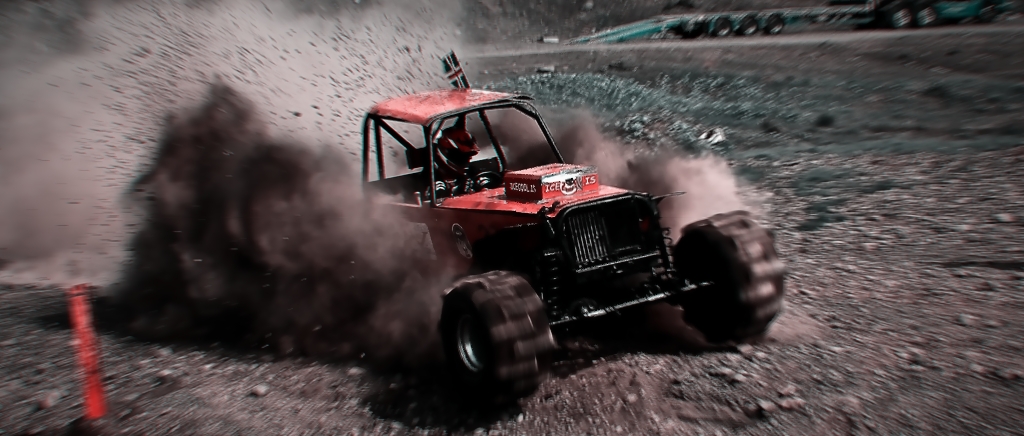
Take the previous two contestants and this is what you get. The other one would be top fuel sand drag racing. But this is more exciting. You have the nitrous fire-breathing V8 from a dragster, fitted with the same tyres with treads big enough for speedbumps, putting them in front of a vertical piece of mine-wall, and there you have it. Vehicles seemingly defying gravity, climbing up the wall as quick as other cars at a green-light start. Or put a lake between them and the finish line, and they would cross it easily... on the surface of the water. The craze that started in Iceland, is the most redneck motorsports of all, and it wasn't even invented in America - with this much fury at least. Insane drivers and vehicles. A much watch for every offroader and anyone in general, whoever saw a car at any point of his or her life.
4. DTM
Probably the most significant and yet most underrated spec-racing in existence - a perfect synthesis of NASCAR and touring car racing with a great hint of F1. Cars are very much like their Americans counterparts in their general layout, but they look ridiculously more fenomenal, running on tracks where ususally F1, touring car, and other prestigeous races are dominant. A defunct series with a magnificent revision and revival, quickly conquering Europe, stepping over to China, and rumors say, in 2013 a DTM NASCAR series for America will be launched due to the excessively successful formula. You get all the contacts that are acceptable in any NASCAR or touring car race, a real man-to-man fight, also, equipped with the sound of early 90s F1 cars. Take that, and consider Mercedes and Audi fighting against each other, clashing the Silver Arrows in numbers enough for a whole league. Plus, it is a haven for ex-F1 drivers, who now can show their more immediate, agressive faces pushing each other around. 2012 will see the return of BMW as well to complete German supremacy once more. There is scarcely anything to say against it.
3. Formula 1
The King of Motorsports remains the de facto King of Motorsports. De jure it is a little bit different, for it is a bad king lately. F1 suffers from a serious identity crisis, mostly since the beginning of the electronic age - concerning driver aids. Driving aids were banned, leglized and banned again due to the conflict of interests whether F1 is a drivers' skills sport or a technology-driven one. Literally. With driver aids turned on, it's more of a technological sport, turned off, it's less F1. Along with budget restrictions and simplifications, most of the great companies started losing interest lately, leading to a near split. I, myself have dealt with a possible solution, too, because the problem is permanent. Yet, it is still the ultimate benchmark of automobile racing and will be for a long, long time afterwards.
2. 24 Hours of Le Mans
If big car companies moved from F1, where are they now? Well, they are all here, between two small French villages. Seperated at birth, the Le Mans 24 Hours and F1 took very different routes, with the former gaining full attention of manufacturers. A win at Le Mans means a lot more to a company professionally than three world titles in a row in F1. Because the knowledge and know-how gained in F1 is being recycled into itself for the most part, experience gained from a 24 hours race here can be used on everyday cars as well. That's why it is no sacrilage that diesels are winning all the time lately, and most cars sold in Europe are diesels, too. This is the real proving grounds of automobile engineering. In addition, racing-wise, it is the perfect combination of man, machine and TEAM. A lot less individual sport than F1. Maybe this is one of the reasons there aren't as many followers of this sport as F1, people find it more difficult to build up a relation with it, whereas in F1 it is a lot more easier to get affected by the drivers themselves. The question in F1 is usually whether X driver would be faster than Y that year. In endurance racing, the main discussion travels around whether Peugeot could beat Audi once more or so. There are several series originating from this single event, but this is the holy ground, right here. In my opinion, the de jure King of Motorsports is the 24 Hours of Le Mans.
1. Pikes Peak International Hill Climb
What? How? I just claimed the Le Mans 24 Hours "KoM". How come it only came in second? Because here is the "King of Motoring Challenge". You can't and won't stay up for 24 hours just to watch Le Mans, will you? I suspect everyone slept one hour or two in the early hours. But the Pikes Peak International Hill Climb is very different. It is a well balanced combination of the most exciting motorsports. Of course, it is a hill climb. Which means, you get a solitary time attack with enourmous elevation. It resembles rallying a bit in this respect, even more when talking about cars, including ones that are sometimes basically indy cars converted for dirt roads, but most of the time, vehicles that recall the best days of Group B rallying and Japanese silhouette racing. And some more. Literally, there are no limits but the finish line in the clouds. Hereby I proclaim the Pikes Peak International Hill Climb the ultimate form of automobile competition.
+1. Drifting
Drifting deseves a whole different section, for it is much closer to figure skating than straight racing. Drifting is the motorsport for the YouTube generation who grew up on Group A and Group B videos back in the day. Drifting takes the most spectacular bits of rallying and touring cars, and extends it to a whole event. For sure, a car is most exciting to watch when going sideways. Especially when there are two or more of them trying to get to the front. And where else can you find a motorsport where small Japanese four-banger hatchbacks are equals of monstrous American V8 and V10 supercars? Truly, truly a drivers' competition. All skill, all handling. That is all that matters for the most part.
Subscribe to:
Posts (Atom)