It was sometime in the afternoon. Quite sunny for a change as I recall. I opened the door to let the dogs out for a snippet of fresh air, but they chose to get lazy and lie scattered on the floor - after all the big walk was due to commence a few hours later. I went outside to enjoy - much to my own surprise - the sunshine I had not valued at all before, as we had plenty of it on the continent, and Bristol, UK was short of such feature. I was pondering whether I should get my second fixture of coffee for the day when it struck me: it could be through the pipeline. I went back for the mailbox key and the notifier. I didn't hear the postman coming since we had the bell broken for a few days, but right in the nearest post office it indeed there was my two tickets to the Welsh edition of the 2012 World Rally Championship season.
Showing posts with label wrc. Show all posts
Showing posts with label wrc. Show all posts
Wednesday, 13 November 2013
Memories of the 2012 #WRC @WalesRallyGB
It was sometime in the afternoon. Quite sunny for a change as I recall. I opened the door to let the dogs out for a snippet of fresh air, but they chose to get lazy and lie scattered on the floor - after all the big walk was due to commence a few hours later. I went outside to enjoy - much to my own surprise - the sunshine I had not valued at all before, as we had plenty of it on the continent, and Bristol, UK was short of such feature. I was pondering whether I should get my second fixture of coffee for the day when it struck me: it could be through the pipeline. I went back for the mailbox key and the notifier. I didn't hear the postman coming since we had the bell broken for a few days, but right in the nearest post office it indeed there was my two tickets to the Welsh edition of the 2012 World Rally Championship season.
Sunday, 24 June 2012
The Struggle Within - FIA World Championships On The Verge Of Collapse
Perhaps needless to say that the root of the problems in both cases is finance, although from very different perspectives.
V6 turbo engines in F1 should be effective from 2014. To cut a long story short, teams don't like the idea because engines would cost more to buy (initially at least), thus they want the current engines to be in charge for as long as possible, because they are cheap and got to the point where they are bulletproof due to their perfected multi-year designs. Let's admit: there hasn't been too many engine failures in recent years. But the world of motorsports stepped to a way new level in the meantime with the added 'green' factor. And while F1 has jumped on the bandwagon with the KERS system, it just draws more attention to the elephant in the room: the engines have been the same for a long time.
When a couple of years ago engine development was frozen, it was the right thing to do for cost-effective reasons and with the added rev-limiting reliability was strengthened that enabled multi-race usage, too - another cost-cutting feature. It all seemed to be going well when the recession hit big time leaving F1 in 2009 with works teams leaving or about to leave and classic races threatened with dropout. To give a nudge and a twist to the knife in the open wound, FIA announced even more restrictions in budget and an equalizing two-tier concept between the 'big' and the 'small' teams in their new Concorde Agreement proposal. This of course enraged the Formula One Team Association enough to quickly announce a breakaway rival series to F1, where works team were free to throw around and burn money according to their good will, getting rid of all the 'green' stuff, in front of audiences that were witnesses of decades Grand Prix tradition but deprived of F1 in recent years or with no GP tradition at all, but simply being new markets. Ultimately a compromised settlement between FIA and FOTA was made until 2012.
On a personal note, in retrospective, I would have liked to see the Grand Prix World Championship happening. Although it all seemed a disaster at the time, it would have correlated with the tradition of pre-war Grand Prix racing more - the Golden Age of its kind - with all the national works teams and the classic events.
Well, we arrived to 2012, the time for the new Concorde Agreement - mostly centered around the aforementioned V6 turbo engines. And surprise-surprise: the fulminated Flavio Briatore is rumored to be working on a GP1 series taking effect in the near future. Powered by the current, normally aspirated V8s.
This time it seems more of a reality because, frankly, all the tools are given, and this time it wouldn't do a favor to the biggest teams, but the smaller ones who would not be able to afford the new V6 engines. Delaying or postponing the new engines in F1 wouldn't be a wise choice as the manufacturers already spent a budget of the GDP of a small, third-world country each, thus giving the plan the red card would make them leave for good surely.
So what could the FIA do to save the cabbage and feed the goat at the same time?
A 'slow' introduction of V6 turbo engines would be an acceptable alternative á la Toro Rosso in 2006, where the newfound team was left without the then-new V8 powerplant on the ruins of Minardi and was forced to use V10s from the previous year, although with serious restrictions on revs. A similar transition could be achieved in a year or two in the current situation, but those who shall choose the V8 should not be part of the Constructors' Championship - if FIA really wants to push the new engines.
Whatever the solution might be, a two-tier system seems inevitable or face two separate series.
As far as WRC is concerned, the situation is quite the opposite. Or very much similar - depending on which side you take on the looking glass. WRC has to face extinction. In the 80s it was competing with F1 in popularity and was the only World Championship sanctioned by the FIA beside the open-wheel series during most of the 90s. Now it has two works team with Ford about to leave allegedly and initially no rallies signing up for the 2013 calendar due to an extra 80,000 GBP to be paid by each event's organizers.
In the meantime, the Intercontinental Rally Challenge is lavishing in works teams and televised, classic rallies despite its almost exclusively European range of territory. During its short history it saw events as the Tour de Corse, the Sanremo Rally, the Targa Florio, the Safari Rally, the Circuit of Ireland and at one point even the Monte Carlo Rally! This and works teams as Honda, Peugeot, M-Sport (de facto Ford), Renault, Skoda and Subaru makes one wonder why isn't this series called the World Rally Championship.
Where did it go all wrong and how IRC become such a massive success in such a short time? Parts of the answer has already been detailed as above, but the presence of works teams had to be settled first. What have IRC had that WRC doesn't?
The answer might lie in two crucial errors made by the FIA on behalf of WRC: granting media (i.e. TV) exposure and introducing the rotating calendar. In other words: it had a convincing live appearance all around the world, but on the downside one could never expect if one's favorite event would return the next year. Combine this with the relatively hard access to it by the masses. Put it simply: a WRC run completely new to the calendar capable of giving the jizz almost exclusively to the locals only due to hard to find it on TV. As opposed to IRC that simply picked up events familiar even to non-motorsports enthusiasts and were left out of the WRC calendar, with having granted first-class coverage on EuroSport. The different approaches resulted in the strange phenomenon in 2009 and 2010 where WRC was left without the Monte Carlo Rally while IRC had the Col de Turini televised live on EuroSport.
And maybe there's a third reason: FIA being at IRC as a sanctioning body only, not peeking over their shoulders all the time. Nevertheless, this sandbox war happens in its own backyard. Such as the alleged F1 vs. GP1 battle.
What is the FIA doing? Perhaps five world championships is just too much, never mind that F1 - the most popular motorsport and one of the most viewed sports in general all around the world - is one of them? And where could all this lead in the future?
(Un)fortunately, motorsports have been there already. IndyCar is one prime example. When the Indy Racing League dissected from IndyCar, it took the Indy 500 with it and nothing more. It promised low-cost, but competitive racing, truer to American traditions and having one race from the "Triple Crown of Motor Sports". The other half, CART/ChampCar seemed altogether strong and somewhat unbeatable: engines and chassis from different manufacturers, not one-make series as the rival one. But something happened down the line. People started watching NASCAR and even in the decreasing TV figures IRL started slowly coming up and finally beating ChampCar. Also, Team Penske and Ganassi Racing decided to do their own take and go to the Indy 500 anyway later with more and more teams leaving ChampCar in favor of IRL, manufacturers leaving the dying series altogether. The double bankruptcy of the series' owner didn't help either and led to the merge of the two series creating once again a unified IndyCar Series.
What were the crucial downfalls of the ChampCar series that are relevant to our current case with F1 and WRC beside finance?
Briefly: disrespecting traditions.
ChampCar couldn't be further from the American tradition. It virtually had no input from the USA as far as the cars were concerned. One could order chassis from British manufacturers and engines from Toyota, Honda, Mercedes or Cosworth. that sounds more like an F1 assembly rather than an all-American showdown. And then the races. The US developed an open-wheel racing tradition on oval tracks and ChampCar managed to put out a calendar with zero oval races on it in its final year. And for the same reason, European and South-American drivers dominated the championship for over a decade, which didn't help to build the American image either - turning more viewers to NASCAR.
But it's all back now, with a completely new car, various engine manufacturers and a growing demand to more oval tracks, as they are providing immense amount of spectacle.
Same way with WRC and IRC: a merger of the two series seems inevitable if FIA doesn't want to lose WRC's credibility and time is running out: the more they hesitate, the more races will sign up for IRC - the current torch-carrier of traditional events and teams. WRC will lose to IRC at some point, the question is when.
As far as F1 and GP1 is concerned: it is a lot harder mountain to climb, but Bernie burned enough bridges to worth revisiting many of the events that were rejected by F1 long ago or discovering new places to race (not necessarily with the most up-to-date venues). This and a well-known, easily accessible format to racing and regulations could make even the big teams think and would be essentially a no-brainer for the rest of the field to switch. The question is whether Briatore would be able to convince such heavy weapon machinery akin to Ferrari to "join the dark side".
For the final word in the matter is: where Ferrari goes, de facto Formula 1 will there be.
FIA, it is now your turn: WEC has just been reborn. WTCC is overshadowed by one works team. GT1WC is dying. WRC is about to lose out to a rival series. F1 is seduced by easy money.
You were looking so much forward to reinvent everything at the same time that you were fooled by simplicity and old wisdom.
Pick up the fight, go!
Sunday, 4 December 2011
On An Island - The Ultimate Motorsports Legend Fights Its Way Back To Worldwide Establishment
In brief, the Targa Florio is back as a world championship event... in

Tuesday, 26 April 2011
The Top 10+1 Forms of Automobile Racing
...and here we are. Losing all unnecessary words, let's just say, without racing, cars would be just boring metal-boxes, carrying people from A to B, pumping adrenalie no more than a ride on a subway would. But thank God for racing spirit, no sooner the second car left the factory, the setting has been paved for competitive purposes. So now, let's take the ultimate forms of CAR racing here. See if you get hooked on some of them.
10. Truck Racing

9. IndyCar

"Stone-age Formula 1" - one would think. And I agree, but that is the point. But let's hold the horses for a minute and get deeper a little bit. IndyCar is one of the oldest seres out there (not formally though), originating from the legendary Indianapolis 500. Since the dawn of formula 1, there has been a growing demand to extend the biggest motor racing event in the world to a series, thus CART was created. Indy cars in the beginning wore strinking resemblance of F1 cars, but as the time of aerodynamic design moved forward in the late 60s, they took a different direction in engineering - as Indy still being centered around Indianapolis Motor Speedway and other oval tracks. No wonder, general development still went towards engine power, even after F1 started backing down. In general, an Indy car is a much cheaper design than an F1, and lately it has become a spec series. Equal cars fighting through ovals and street circuits, being similar to F1 racers 20-25 years back (especially with the new formula from 2012), they sometimes bring the same excitement as those races back in the day. That alone makes it to be on the list.

7. Dakar

6. NHRA Top Fuel

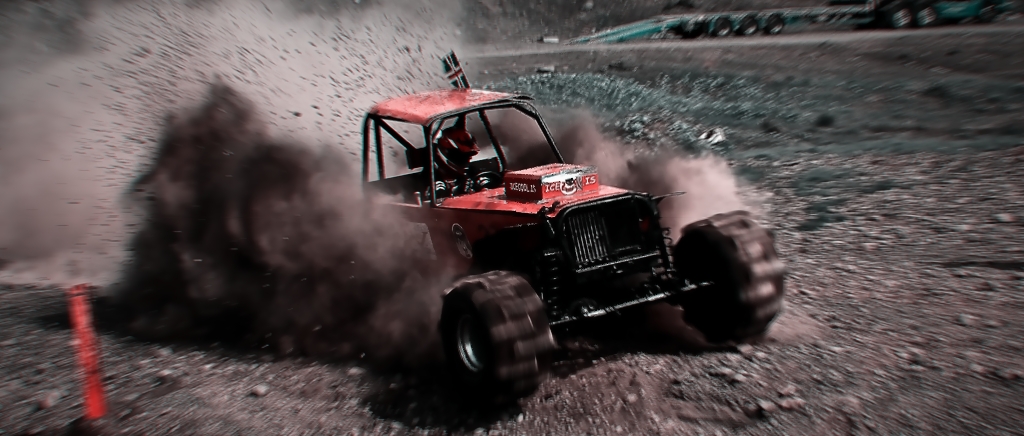
5. Formula Off-Road
4. DTM

3. Formula 1

2. 24 Hours of Le Mans

1. Pikes Peak International Hill Climb

+1. Drifting

Saturday, 22 January 2011
Frantic
Recent car magazines feature the Lancia Stratos and the Audi Quattro prototypes on their cover. Impressive, massively famed racecars from the past now becoming reality again if it correlates with God's will.
I asked myself a question in a previous post, what if this is the beginning of an end? What if this marks the end of the petrol engine? Moving on in my philosophical brainstorming I started thinking about the next possible legends to be revived. The Stratos was one legendary Group 4 car in rallying. the Quattro was another in Group B. The question was obvious. What are the legendary cars worth to revive in Group A, WRC and maybe S2000?
I believe we still have to stick rallying since track racing for these categories are too much overshadowed by higher classes of racing e.g. Formula 1, Le Mans, GT series, etc. and most of the time these are purpose-built competition cars or converted higly priced supercars that people don't even see in reality most of the time. And while WTCC is extremely exciting, there is an unconscious thought somewhere in the back of your brain: some cars could do this much faster.
So, rallying, WRC to be precise. Group A is considered to be the silver age of rallying. After Group B was banned, it was up to this class to stand up for competition in fame against F1 mainly. While the hardly gained attention to rallying started declining, the races were almost as exciting.
Fact is, the choice is quite obvious for the ultimate Group A legend, which at the same time is the ultimate rallying winner. The Lancia Delta Integrale. Winning 6 (SIX!) titles on the trot, it is definitely one legendary machine in every aspects. As a road car as well. It is highly sought after even today, selling for prices as new, rally-spec. cars.
Eventhough we have the third-generation Delta on the market, it matches no resemblance to the old car. It is a stilish, luxury hatchback, very desireable indeed. But it lacks the DNA for racing. Lancia says 'delta' science stands for change and that's what they were following.
I can see that.
And it's wrong.
The old car has been so highly famed that we tend to forget other contestant, though there were many of them and some of them made quite a legacy as well. This I would call the Japanese invasion.
While Lancia was the all-time favourite and most successful car, it was probably the Ford Escort RS Cosworth only that could make a name in the sport. It needed to be an Escort, a former legend, and Cosworth, an all-time legend. Great car in every means, but it was no match for the Japanese newcomers.
The path for victory in fame was lain down to the Toyota Celica Turbo, the Subaru Impreza and the Mitsubishi Lancer Evolutions. They were stretched on every kid's bedroom wall and everyone was cheering when one appeared in the streets. I turn my head when an Impreza or an EVO shows up. Their fame is still living strong but fading rapidly.
Toyota was caught on cheating manipulating the turbo air restrictor plates on the Celica, huge shame for any contestant, even bigger one for a Japanese. They pulled out of the race temporarily only to return later with the Corolla WRC collecting one title as a team. But the days of the Celica were numbered. A next generation of it appeared on the market with mild success, it was not the fire-breathing beast it used to be. How interesting is the evolution of it: starting as a RWD car, making a spinoff, more powerful version of it, named the Supra, going 4WD and ending up as an FWD little sportscar. And that was it.
Subaru and Mitsubishi did much better. There was no either-or, it was both of them. While Tomi Makinen was winning titles one after another, Subaru as a team were superior. They were battling for fortune and fame, too. Both of them amazing street machines, highly appreciated. The Delta's name was decaying and the new heroes were these cars. Blue or red and white. These were the colours to fall for.
And then World Rally Car happened...
WR Car was an attempt to grasp manufactuers' attention to enter WR Championship. WRC regulations don't need homologation cars to be probuced, now the subtitle said: tweak any of your cars you want commercially successful, here's the template, fit it into it. While it sounds like something NASCAR, in the beginning it was a great idea. Subaru and Mitsubishi were still in the game, Toyota was on the map again, but it was the fightback of the European manufactorers as the new decade, the new century and the new millenium was approaching.
PSA started to gain domintaion in the sport once again, rolling out the Peugeot 206, which is (attention, please) just one number higher than 205. And we all know what the 205 stands for, don't we? A legend was returning for scalps. Even Ford could ride the winds of change as they rolled out the Escort-successor Focus. PSA then quickly turned the wheel and went for its Citroen brand alongside with the now Peugeot 307s only to be concluded as a Citroen only representative. And it was all good, until...
Mitsubishi got completely off the map. They couldn't really fit into the new rules, their car was lagging behind like a giant turbo, and while their EVO reputation was still strong, it couldn't be kept up for long without acheivements. So they pulled out of the sport and tried making legends on the streets.
Subaru followed Mitsubishi soon with Richard Burns and Petter Solberg winning individual titles but there was no other grips to hang onto. Subaru was the no.3 car behind Ford and Citroen. So much, when the economy crisis set, they were ready to pull out completely.
So now we have Fords and Citroens. Which could make a rally legend? Could Mitsubishi and Subaru still do it in the first place?
Mitsubishi went on to be a film star in movies about street racing and outside Japan and the hardcore rally fans around the world had no other connection to this car other than these movies. Tuners, ricers adopted the "EVO" abbreviation in a way that it became almost a pejorative term in more serious motorsport enthusiasts, Mitsubishi was dropped out of the serious competitors in the lack of racing background.
Subaru tried becoming more family friendly (only to be followed by Mitsubishi, too). The Impreza had a diesel FWD version as well for cheap, so everyone could buy it. The Lancer basically dropped the EVO nameplate and Lancer was pushed as a brand. It came in various bodies, all road and environment friendly with a bit of a hint of its past.
So back to Ford and Citroen. Looking at a Citroen, can you see the rally spirit? Because I can't. Citroen makes great cars these days, but none of the WRC variants or Loeb could convince me to buy any of those. Because they are just seperated at birth. Like twins that never met.
Now the Focus is something. The RS is possibly one of the best drivers' hatchback out there. Revolutionary designs under the body, great engine, awesome looks. It is destined to be a WRC legend.
Only it's not, since Ford dropped the Focus in favour of the Fiesta. Now they can build it up all over again and we'll see what it's capable of.
Fact is, time will tell whether the Focus or the Fiesta make legends.
However, new winds are coming.
MINI is ready to enter. In a way it is such a news as saying Ford is making a new Escort for WRC. Resurrecting one legend that could make further legends. That is one hope.
The other one is the Toyota/Subaru FT86 concept which is unlikely to enter any races outside tarmac due to its layout, it may be a successful attempt for both factories to regain some of their racing reputation. It's not a Subaru, not a Toyota, but both. In layout it is the legendary Toyota Corolla AE86 Group A Japanese touring car star and underground street racing and drifting emperor carrying the Subaru flat 4 not available anywhere else, bringing back some of the glory of the Impreza days.
These are the two cars that could make a name again the factories are frantically eager of.
These may be the last stand for resurrecting fading memories of the past and hope in the fans.
Frantic to see soe action?
Subscribe to:
Posts (Atom)


